17 Reasons to Row, Row, Row Your Way to Killer Fitness

In a gym packed with ellipticals, treadmills and bikes, the rowing machine was once the piece of equipment you could count on to be unoccupied. Well, not anymore.

Suddenly, fitness experts are raving about the benefits of rowing machines — aka, ergometers or ergs.

So get ready to kiss spinning goodbye, ‘cuz it’s all about rowing now, baby. 

All the rowing perks…

  1. full-body burn
  2. approachable workouts
  3. low-impact wins
  4. meditative moves
  5. cardio-licious
  6. buh-bye, treadmill boredom
  7. affordability
  8. #LegDay
  9. personal records
  10. to burn calories
  11. it’s trendy
  12. for fun!
  13. fast fitness
  14. cardio + strength training
  15. brain gains
  16. convenience
  17. to shake things up

Whether you buy your own machine or hop on one at the gym, rowing offers big benefits. Keep scrolling for the deets.
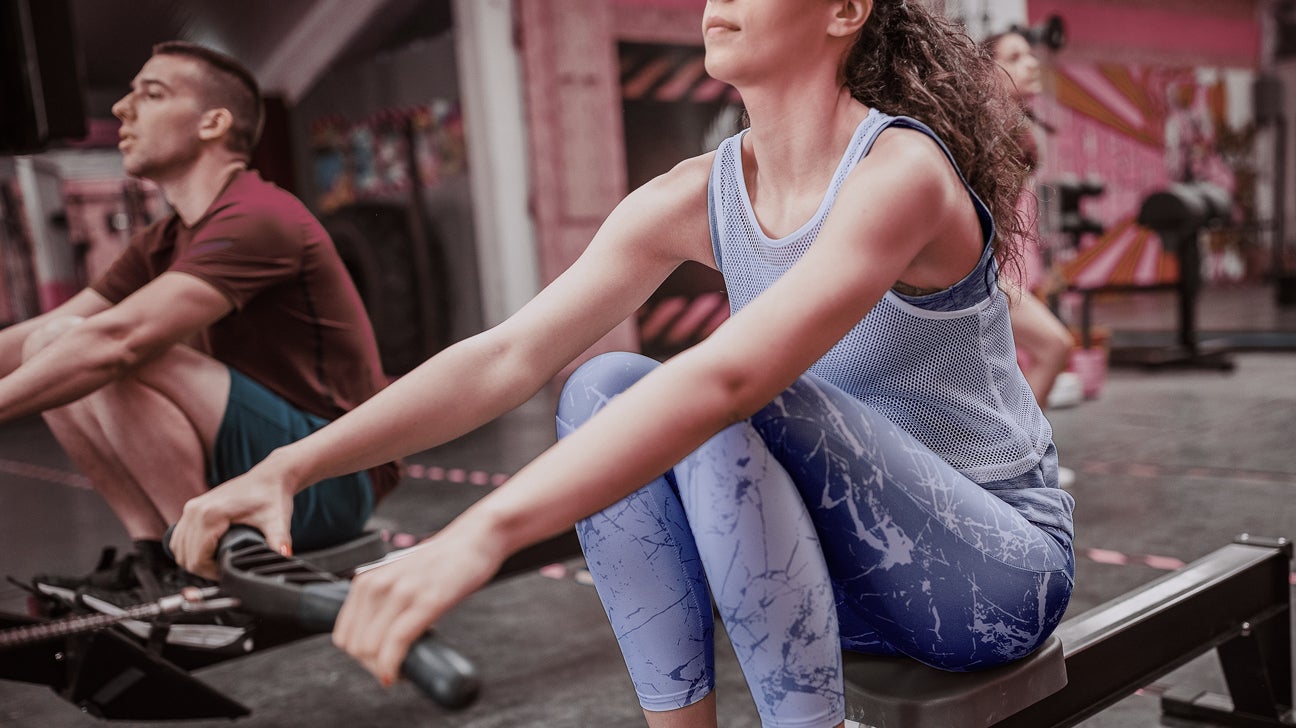
Young woman exercisinig on a rowing machine
Getty Images

17 reasons to reach for the rowing machine

1. You’ll get a full-body workout

Maybe you think rowing = ripped arms. But according to the American Fitness Professionals Association, rowing is 65 to 75 percent legs and 25 to 35 percent upper bod.

It’ll shred your upper back, pecs, arms, abs, and obliques. It’ll also strengthen those quads, calves, and glutes.

2. It’s approachable

Rowing is great for fitness newbies because the machines can be customized to your fitness level.

Rowing is also a safe, active sport for folks who are blind or visually impaired. In a 2015 study of people with limited vision, participants who rowed 5 days a week for 6 weeks decreased their total body fat percentage and gained flexibility and strength.

3. Get low… low-impact, that is

Forget the joint stress of running on hard pavement. With rowing, you get to choose your movement and pace, which is *super* helpful when you’re recovering from an injury or marathon.

Rowing can even be a great choice for folks with early osteoarthritis. In a 2014 study, peeps who rowed for 8 weeks experienced 30 percent better joint rotations in their elbows, shoulders, and knees.

4. Ommm… it’s actually pretty meditative

Whether you row on the open water or in your living room, it’ll quickly become your daily dose of Zen. The smooth, repetitive steps of the row stroke — catch, drive, finish, and recovery — become trance-like after a while.

Like other exercise, rowing releases endorphins to boost your mood kick stress to the curb.

5. Hello, cardio!

Rowing isn’t just for strength training. Ergs are *amazing* for your heart and lungs.

Cardio workouts get your blood pumping to every part of your body, which could potentially prevent heart probs down the road. 

6. Goodbye, treadmill boredom!

YOLO: So many people are swapping their treadmills, ellipticals, and exercise bikes for rowing machines.

Why? Personal trainer Shane Farmer of Dark Horse Rowing says, “Because it’s complete. If you look at an elliptical, treadmill, etc., all of those work one very specific muscle group.” Meanwhile, “the big benefit of the rowing machine is that you get everything hit at once.”

7. It’s easy on the wallet 🤑

You can snag a quality machine for $100 — that’s basically less than a month of hot yoga.

Some erg prices climb above $1k, but there are plenty of simple, streamlined options in the double digits. Plus, if you’re swapping your gym membership for a machine, you’ll be saving money in no time.

8. Toned legs for days

Never skip leg day, amirite?

The rowing machine works your legs and arms in one swift move, so you can kiss your unnecessarily complicated gym schedule goodbye.

Bonus: You’ll torch your butt, too.

9. Personal records

Some people just can’t resist a challenge. If you’re the type to arm wrestle someone twice your size or strain to break your PR in a 5K, try an erg.

Though you’ll move through the same motions, you can raise the resistance and push your speed as you become a more seasoned rower. Level-up action FTW.

10. You’ll crush calories

Health experts report that a 30-minute rowing session burns up to 377 calories.

We don’t have to tell you that the number on the scale isn’t everything. But if you’re trying to lose weight for health reasons, you need to burn more cals than you consume.

11. It’s totally cool now

So, #rowing is the fitness buzzword of the moment. But it wasn’t always that way.

“I’ve been putting out videos since 2015,” Farmer says of his rowing channel. “And I started with the idea of, I’m gonna make rowing cool. Well, here we are.”

Even if you don’t care about what’s trending, at least you’re likely to have a friend or two who can compare rowing #goalz.

12. Fun fitness FTW

Since rowing works most of your muscle groups, you really have to stay engaged while doing it. Basically, it takes just enough effort to keep things challenging and fun.

You can still binge-watch “Gossip Girl” while you row — but you might be feelin’ yourself too much to notice Chuck’s antics.

13. It’s like a 20-minute gig

You don’t need to spend half your life at the gym to reap results with an erg. It’s the MVP of jam-packed schedules everywhere.

The CDC recommends at least 150 minutes of moderate aerobic exercise or 75 minutes of vigorous movement per week. Rowing sits somewhere between moderate and vigorous, so just 20 minutes a day more than covers your minimum.

14. Cardio + strength = a winning combo

In case you haven’t already heard, rowing machines knock out two birds with one stone (or two essential types of exercise with one sweet machine).

Ergs consistently strengthen your guns and pins while getting your heart pumping.

15. Brain gains

There are so many reasons to exercise — and most of them have nothing to do with a bangin’ bod. Hopping on your rowing machine could reduce stress, boost happy chemicals, and even combat cognitive decline.

16. Quarantine convenience, bby

You’re probably home a lot RN, and that could include gym time.

Unlike other exercise equipment, rowing machines fold up to easily slide under the bed or get tucked into a closet. Who needs a fancy home gym, anyway?

17. Change is good

Rowing is unfamiliar to many folks, so it takes patience and vulnerability to learn the ropes. Farmer says the slight learning curve of an erg could actually change your outlook on life.

“If you’re willing to say, ‘I need to learn this’ … you’re probably going to be willing to open up the rest of your life to say, ‘I need to learn other things. I don’t know it all,’” he says.

Let’s break down the rowing flow

Say it with me: Legs, core, arms. Arms, core, legs.

Here’s your step-by-step primer to using a rowing machine:

  1. Lock in. Strap your feet into the pads. Make sure they don’t slide around.
  2. Grab hold. Next, bring your knees up and reach for the front handlebar, aka the “catch.” Your torso should tilt slightly forward, but your spine should be straight.
  3. Activate the leg sequence. Use your leg muscles to push off the footplate. Really power-up those hamstrings.
  4. Engage your core. Squeeze your abs and lean backward. Just as you’re about to hit a 45-degree angle, pull the handlebar toward your bod and lightly touch your chest with it.
  5. Work your shoulders. You’ve reached what’s called the “finish.” For the big finale, pull your shoulder blades together.
  6. Flip it and reverse it. Now reverse the movement back to the catch. Extend your arms, pull your torso forward, bend your knees, and bring your legs up top. One stroke down! 👏

Achieving next-level form

Avoid injury and discomfort by focusing on perfect pacing and posture at the beginning of your #RowLyfe adventure.

Push, don’t pull

“Imagine the movement as a push, rather than trying to pull the handle,” says Farmer.

He explains that your rowing stroke should break down to about 60 percent leg work, 40 percent upper body. “If you’re thinking about pushing, odds are you’re going to use that larger muscle driving group, which is going to create a more effective stroke,” he adds.

Slow down

First form, then speed. Farmer encourages thinking about the rowing movements parts and concentrating on good form throughout.

“Slowing it down gives your brain time to process that and think through each,” he says. “Sequencing is really important to getting the entirety of the stroke right.”

The 20-min rowing workout

Farmer’s put together the perfect rowing machine workout to help you sweat it out and perfect your form.

Warm up

“You never want to jump into a workout cold,” says Farmer.

Try some light moves that wake your muscles without making your heart race:

Set up

Now, get your erg ready.

  1. Click “Select workout.”
  2. Choose “Single time.”
  3. Finally, change “Split length: to 1-minute intervals.

Let’s do this thing

Think of this workout as a ladder. You’ll work your way up to 25 strokes per minute, stay there for 2 minutes, then climb back down.

By varying your stroke speed, you get a smooth, moderately intense workout. Here’s the play-by-play.

Minute Strokes
1 16
2 17
3 18
4 19
5 20
6 21
7 22
8 23
9 24
10 25
11 25
12 24
13 23
14 22
15 21
16 20
17 19
18 18
19 17
20 16

The cool down

You did it! Now cool down for at least 5 minutes. Try lightly rowing, stretching, or walking.

Now pat yourself on the back for a job well done! 💪


from Greatist Health RSS Feed https://ift.tt/2JwGg7v

Is Anal Bleaching Worth the Bootylicious Hype?

Welcome to the wonderful world of butthole bleaching. We’re happy you could join us. Let’s begin with the basics.

Anal bleaching 101

What is it? Anal bleaching is a popular cosmetic treatment that lightens your skin around your anus.

How does it work? You can either get a cream or chemical peel to break down melanin (skin pigments). You can also opt for a laser treatment which can combat hyperpigmentation.

OK but why? Because sometimes your butthole needs a glow up. In theory, anal bleaching is no different from any other cosmetic treatment. It makes peeps feel more confident about their appearance.

Does it hurt? Anal bleaching might feel weird or uncomfortable. But it shouldn’t be 10/10 painful.

Can I DIY it? You can do your own anal bleaching at home. Just make sure you find a safe and reliable product that’ll leave you saying, “I LOVE MY NEW ASSHOLE.”

Is it safe? Butthole bleaching is safe when done correctly. A bad batch or an improper technique can lead to skin damage, discoloration, or infection.

Now that you know the lowdown, here’s a deep dive into all things anal bleaching.

anal bleaching illustration
Design by Dana Davenport

DIY anal bleaching

You can totes bleach your bum at home. There are lots of creams, gels, and lotions available online or in beauty supply stores.

Keep in mind, everyone’s different. Those with allergies or sensitive skin might have a harsher reaction to the treatment. Def do a patch test before you go to town. Your booty will thank you later.

Safety first

Anal bleaching is perfectly safe when done correctly. Just be sure to only buy top-notch products. Bad brands can lead to infection, skin damage, and permanent skin discoloration.

Product PSA: A lot of skin-lightening products — especially brands made outside the United States — aren’t regulated. So, you won’t always know what’s really going on with your body. And your anus is one area you don’t wanna mess with. (Trust us.)

Ingredients to look out for

Here’s what to look out for in a DIY anal bleaching product.

Malic acid: Naturally derived from fruits, this solution decreases pigmentation without the use of harsher chemicals like hydroquinone.

Kojic acid: This exfoliating acid has been approved for use in concentrations of 1 percent by the Cosmetic Ingredient Review Expert Panel. Bonus: It also has properties that may reduce the signs of skin aging.

Malic acid: This alpha-hydroxy acid (AHA) loosens the bonds between skin pigment cells. This allows the cells to flake off and expose paler skin.

Lactic acid: Got milk? This dairy-derived AHA is a dope way to even out skin tone and treat hyperpigmentation. BTW, you can’t pour milk down your butt crack. It has to be an actual lactic acid concentrate. 🐄

Emblica extract: Give your butt the best of both worlds with this Indian gooseberry serum. It’s a natural skin lightener and a killer source of vitamin C.

DIY should work just fine, but you might get better results going to a skin care pro. They have access to stronger and better-quality products. Plus, they’re trained to bleach your butt. This might reduce your risk of side effects.

Professional bleaching

Sure you’ll pay more… but your anus deserves the best.

First time jitters?

We feel ya. Having someone that close to your poop chute can be intimidating AF. Feeling freaked out your first time is totally normal.

Just know you have nothing to be ashamed of. Skin care pros are trained to talk you through the treatment. What’s scary for you is just another day at the office for them.

Is it permanent?

Anal bleaching results don’t last forever. Daily activities — like walking, running, sweating, and sitting — can cause chafing or friction. This can lead to more pigmentation.

DIY treatments have the shortest butt-shelf life. You need to touch it up every 1 or 2 months. Professional-grade treatments usually last a bit longer.

Laser treatments usually give the longest results. You only need a touch up every 6 months to 1 year.

FYI: Results vary from anus to anus.

How to find a provider

Talk to your dermatologist or doctor before getting a treatment. They can confirm that you don’t have underlying health issues.

Once you get the all-clear, you can check out local:

  • spas
  • salons
  • plastic surgery centers

Some offer both topical and laser anal bleaching treatments.

How to prep for your appointment

Pre-procedure rules are super simple. Here are some important tips.

  • Don’t sweat it. Avoid activities like hot yoga and hardcore cardio a few days before your bleach sesh. Sweating might make the treatment less effective.
  • Ditch the thong. Tight underwear — especially the up your butt-crack variety — can lead to friction.
  • Avoid hair removal. Waxing, shaving, or Nair-ing can irritate the skin around your anus.
  • Don’t get your freak on. Sex can lead to tiny tears in your anal region. This increases your risk of discomfort during and after your bleaching treatment. So, avoid anal or vajayjay sex for at least 3 days before your visit.

Here’s what to do the day of your appointment:

  • Gently clean the area around your bum.
  • Wear loose clothing to avoid excess friction.
  • Take an over-the-counter (OTC) pain killer (e.g. ibuprofen) beforehand.

Great ass-expectations (what to expect from the procedure)

Here’s a play-by-play of what happens during your appointment.

  1. You might be asked to fill out an intake form upon arrival. This helps your provider learn more about your skin.
  2. They will take you to the treatment room.
  3. You’ll be asked to remove your bottoms and lie on your back.
  4. They might ask you to roll your legs to one side. This makes it easier for them to get to your rectal region.
  5. Your provider will apply a cream, gel, or chemical peel to your anal area. They might give you a numbing cream if you opt for a laser treatment.
  6. Voilà! Once they’re done, you can get dressed and take your new bleached butthole out for a spin.

Good news! The entire anal bleaching process should take less than 30 minutes. The exact timing depends on your service and provider.

After care

Most folks recover from anal bleaching in about a week. But it can be faster or longer depending on your skin and what kind of treatment you received. Here are some helpful healing tips.

Products: Your provider will probably send you home with a cream, lotion, or gel to help soothe the area and kick-start the recovery process.

Patience: Give your booty-hole time to heal. Avoid any activities that lead to friction. You should also wear loose fitted bottoms for a minimum of 3 days. This can help prevent inflammation and may reduce your risk of infection.

Call the doctor if you have:

  • a fever
  • anal discharge
  • blisters or open sores
  • bleeding, pain, or a raw area
  • pain or discomfort lasts longer than a week

Do I need to avoid sex?

Don’t have sex for at least 3 days after your treatment. This helps prevent irritation and infections. Continue to abstain if your skin still feels raw or irritated after day 3.

Laser bleaching

Laser treatments break down dark skin pigments into smaller particles. These cells then get carried off by white blood cells.

You might see results after your first treatment. But you prob need to have it done 3 or 4 times for the best results. After that it’s all about upkeep. Get a touch up every 6 months to 1 year to maintain the look.

What does laser bleaching feel like?

The thought of a laser beam scalding your buttcrack is an actual nightmare. Thankfully, this procedure is nothing like a Dr. Evil torture device.

TBH some peeps do feel pings (brief bolts of pain). Others say it feels like a hot, prickly sensation. But it should never be a kill-me-now vibe.

After the procedure, your affected skin might feel a bit sunburned or tender. This can last up to a week, usually peaking in the first 2 or 3 days.

Are there side effects?

Both DIY and professional anal bleaching can lead to uncomfortable (and sometimes permanent) side effects.

DIY risks include:

  • Genital issues: Be sure not to get products near your coochie, peen, or inside your rectum. Ouch.
  • Anal strictures: This is when scar tissue narrows the end of your anal canal, preventing your rectum from stretching. This can make pooping a real pain in the ass. It can also lead to constipation.
  • Permanent damage: Some products can scar, damage, or discolor your skin. This can also occur if you don’t follow directions and leave the solution on for too long.

Professional treatment risks include:

  • Irritation: Professionals tend to use stronger products, which can be more irritating to your skin.
  • Laser damage: This can cause permanent scarring and discoloration if done incorrectly. Always go to a certified specialist who really knows what they’re doing.
  • Skin damage: A bad treatment can leave you with permanent skin damage like scarring and discoloration.

Bleach it real good

On the hole, anal bleaching is a safe cosmetic treatment that can boost your booty confidence. But(t) keep in mind, your bum is peachy as is. If you think butthole bleaching is right for you, check out reputable providers in your area. You can also find high-quality DIY products online. 🍑


from Greatist Health RSS Feed https://ift.tt/34XCkF7

Fry More, Waste Less! How to Reduce Oil Waste When Frying at Home

how to reduce oil waste when frying at home
Getty Images

As the holidays approach, perhaps you’re hankering for a plate of crispy latkes just like Bubbe used to make. Maybe you’re craving deep-fried turkey this Thanksgiving. Or maybe it’s currently mid-April and you’ve stumbled onto this article because you’re in the mood for something fried and tasty.

No matter when or what you’re frying you probably have the same questions: exactly how much oil should you use? And what should you do with the oil afterward?

We talked to two culinary experts to get the scoop on home frying safely, and with minimal waste.

What oil should you use? 

Not all oils are created equal when it comes to frying.

Olive oil and coconut oil are better suited for sautéing (where the food is cut into small pieces so it cooks quickly) rather than shallow or deep-frying because they have a low smoke point, meaning they’ll smoke and burn before they get hot enough to fry your food.

Darren Clay, a chef with University of British Columbia’s dining services and a former culinary school instructor, favors grape-seed oil for frying because it’s “neutral, fairly inexpensive, and has a high smoke point.”

Many people like the taste of peanut oil (which is more affordable and easier to find in most supermarkets), but commercial kitchens tend not to use it, because it’s a common allergen, he adds.

If you don’t have any concerns about peanut allergies, peanut oil could be the best choice for your home frying needs. Otherwise, grape-seed oil may be your best bet (although this option is pricier).

Oil type Smoke point
extra virgin olive oil 325–375ºF (163–190ºC)
schmaltz or lard 370–375ºF (188–190ºC)
grape-seed oil 390ºF (199ºC)
peanut oil 450ºF (232ºC)
safflower oil 510ºF (265ºC)

How long it takes any given oil to reach its smoke point will vary based on the type of pan and stove you’re using, and how much of the oil you’re heating. Regardless, if the oil stops shimmering and starts smoking, that’s a sure sign that you need to lower your heat ASAP.

Never pour water on a grease fire!

If your oil ever passes the smoke point so far that it catches fire, do not pour water on it. Water and oil don’t mix, remember? Water will send your flaming oil splashing and sliding across the stove and counter. Here’s what to do:

  • Cover the flames with a lid to extinguish oxygen.
  • Turn off your heat source (especially if using a gas stove).
  • If it’s a small fire, you can pour salt or baking soda on it to extinguish it.

How much oil should you use? 

That depends on whether you’re deep-frying, shallow frying, or pan frying. For deep-frying, use enough oil to completely submerge the turkey, donuts, or whatever else you’re frying.

If you’re using a deep fryer, it will typically have a fill line for the oil. “That’s a good indicator and it tells you when to stop,” says Nik Fields, a chef and owner of Chic Chef Co., a line of infused olive oils and balsamic vinegars.

For shallow frying, like with latkes, you want the oil to be halfway up the side of the food so you only need to flip it once. (Shallow frying differs from sautéing because it uses larger pieces of food like a fillet.)

Pan frying — when only one side of the food needs to take on color, like a piece of fish or chicken — requires very little oil. “A very thin layer [of oil] that stretches across the pan is sufficient,” says Clay, “as the viscosity of oil thins out when heated.” He advises home cooks to start with a little bit of oil. “You can always add more oil as opposed to using too much at the beginning,” he adds.

To get a satisfying crunch, Fields suggests spacing out the food. “Overcrowding the pan will lead to soggy fried food,” she cautions. “No one likes soggy fried chicken.” 

When to stop pouring the oil

  • Deep fry. For fully submerged frying, a proper deep fryer will have a fill line indicating how high the oil should be in the basin.
  • Shallow fry. Use just enough oil to come halfway up the side of your food in the pan so you only need to flip once. Start with less oil than you think you need because the food will displace it slightly. Add more as needed.
  • Pan fry. A tablespoon or 2 will do, just enough to coat the bottom of the pan in a very thin layer as the oil heats up.

Can you reuse cooking oil? 

Clay filters used cooking oil with a wire mesh sieve and stores it in a sealed jar in the fridge for reuse. Depending on what he’s used the cooking oil for and how neutral those flavors are, it can last for up to 3 months in the fridge. If you’re frying something breaded, however, the bread crumbs tend to break down the oil more quickly and can lower the potential reusability, he adds.

You likely don’t want to reuse oil from fried fish or other fragrant foods, Fields points out, because the next food you fry will take on that smell. “The only way that I would reuse the oil is if I fried something that doesn’t have a smell,” she says. “If you fried protein last time, stick to that same protein.”

Also, don’t leave a pot of oil uncovered overnight if you plan to reuse it. Oil can attract fruit flies or other particles you don’t want in your food. Yuck.

How should you dispose of used cooking oil? 

Whatever you do, don’t (we repeat: DO NOT) pour oil down the drain, as it can clog the pipes. “A bottle of $5 oil can cause a plumbing problem that costs $200,” Fields warns. She suggests cooling the oil, pouring it into a recyclable, resealable container (like an empty soda bottle or pickle jar), and throwing it in the trash.

Clay pours small amounts of used cooking oil into his compost, as allowed by the city of Vancouver, Canada. Other jurisdictions may not accept cooking oil in compost bins. For large quantities of cooking oil, some cities have grease and oil drop-off programs.

How can you use up specialty oils? 

Say you bought a bottle of seasoned oil and you don’t use it up. Fields says it will keep for 6 months to a year if you reseal the bottle and store it in a cool, dry place. 

“You could possibly use it for pizza dough or some type of bread because it’s already seasoned,” she says. “The oil would be baked into the dough to coat the pan from burning and to add extra flavor.” Also consider using leftover oil to create your own salad dressing or marinade.

Now you got all the facts, go forth with (the right kind) oil and recreate your favorite fried foods at home, then dispose of — or reuse! — the oil responsibly.

Susan Johnston Taylor is a freelance writer who’s contributed to the Boston Globe, Entrepreneur, and Fast Company, among other publications. Read more of her work.


from Greatist Health RSS Feed https://ift.tt/32bkahw

Antioxidants — Keep on Fighting the Good Fight!

Uh oh, are you experiencing a little oxidative stress? (Aren’t we all?) Just load up on antioxidants and flick those free radicals to the curb!

Translation: The processes of being alive generates byproducts in your cells that can lead to not feeling great. The good news is a varied diet with plenty of fruits and vegetables is full of vitamins and minerals that can clean up your free radicals.

Meet your new health hero, the antioxidant. The big three antioxidant nutrients are vitamin A (beta carotene), vitamin C, and vitamin E.

Free radicals are created by your cells during the normal process of exercising and converting food into energy. Free radicals are also created during exposure to environmental conditions like sunlight, cigarette smoke, or pollution.

Free radicals cause oxidative stress and lead to cell damage, which could play a part in diseases like Alzheimer’s, Parkinson’s, cancer, diabetes, heart disease, and eye diseases.

Where’s your hero antioxidant when you need it? Hiding in plain sight, inside a diet full of fruits, vegetables, meat, seafood, dairy, and whole grains!

Getty Images

Think orange for crunchy carotenoids

Vitamin A or beta-carotene is necessary for good vision, immunity, reproduction, and healthy organs. People who eat a diet rich in beta-carotene seem to have a lower risk of some kinds of cancer.

However, smokers who take high doses of beta-carotene have a higher risk of lung cancer. Other research shows antioxidant supplements may help slow vision loss due to age-related macular degeneration.

Here are some good food sources of vitamin A or beta-carotene:

  • salmon
  • green leafy vegetables, broccoli, squash, and carrots
  • sweet potato
  • fruits like cantaloupe, apricots, and mangos (have you noticed the orange theme?)
  • dairy
  • breakfast cereals with vitamin A added
  • organ meats like beef liver

C is for citrus

We need vitamin C for a strong immune system, to fight free radicals, to build collagen, and to absorb iron.

Eating a lot of fruits and vegetables with vitamin C is associated with a lower risk of some cancers. Preliminary research indicates high doses of vitamin C could shrink tumors in animals and test tubes.

Because oxidative damage contributes to cardiovascular disease, researchers believe a diet high in vitamin C and other antioxidants may be protective. Vitamin C may slow progression of macular degeneration.

Eat these foods for a good dose of C:

  • citrus fruits and juices
  • kiwi
  • strawberries
  • cantaloupe
  • red and green peppers
  • tomato
  • broccoli
  • baked potato

Vitamin E

Vitamin E supports the immune system and prevents blood clotting. Dietary sources of vitamin E include:

  • vegetable oils, like wheat germ, sunflower, safflower, corn, and soybean
  • nuts and seeds
  • green vegetables
  • fortified cereal, juice, and other foods with vitamin E added

Zinc outside the box

Zinc supports the immune system and helps the body build proteins and DNA. It also helps with healing and the senses of taste and smell.

The following foods are good sources of zinc:

  • oysters
  • seafood
  • red meat
  • poultry
  • fortified cereals
  • beans
  • nuts
  • dairy
  • whole grains

Super selenium

Besides protecting your body from free radical damage and infection, selenium is important for reproduction, DNA production, and thyroid function.

Adults need 55 micrograms per day, but no more than 400 micrograms. Pregnant women should get 60 micrograms, and breastfeeding women need 70 micrograms.

People who consume less selenium are at higher risk of developing cancer of the colon, rectum, prostate, bladder, lung, esophagus, stomach, and skin, but it’s unclear whether taking supplements would lower risk.

People with low selenium levels can have thyroid problems, but again, there’s not enough research to say whether taking supplements would help.

The best food sources of selenium are:

  • seafood
  • meat
  • eggs
  • dairy
  • grain products like bread

Cook ‘em how you like ‘em

No matter how you cook (or don’t cook) your veggies, they’re yummy and good for you, so don’t stress.

Different cooking methods do alter the nutrient content in some foods. Cooking methods that use water (boiling, poaching, and simmering) reduce the vitamin content of vegetables by leaching nutrients into the hot water.

“Dry” cooking methods (broiling, grilling, baking) preserve more nutrients in cooked food. Sauteing and frying food can enhance some nutrients and deplete others.

Steaming and microwaving are solid cooking options for preserving nutrients.

Antioxidant showdown: pill form vs. food form

Eating a variety of foods is the best way to get most nutrients your body needs. Could you get a little extra vit C or vit E from a pill? Yeah, of course. There’s just not much scientific evidence supporting the effectiveness of antioxidant supplements at preventing disease.

What’s the harm in a little pill?

Dietary supplements can cause side effects and may interact with prescription medications. For example, vitamin E supplements can increase bleeding in people who take blood thinners. Keep your health care provider up to speed on any supplements you decide to take.

This is where it gets risky

High doses of supplements can come with even higher risks. There’s a connection between taking high doses of beta-carotene and lung cancer in smokers. Vitamin E supplements may increase risk of prostate cancer and stroke. Stick to doses that are recommended by your doctor.

Not necessarily great for athletic performance

Because free radicals are produced during exercise, you might theorize that antioxidants would improve athletic performance.

A 2014 study of 54 young people assessed their performance during a training program while taking a daily dose of vitamins C and E. Study participants who took the vitamins rather than placebo had impaired adaptations in their muscles (though no impairment in performance was measured).

Taking vitamin C supplements

Vitamin C seems like a sort of pana-C-a, right? Take it to stop a cold virus, take it to boost your energy, take it to prevent disease? Well, it’s good stuff, but it’s not a cure-all. Here’s what science says.

Crush the common cold?

Regularly taking extra vitamin C does not seem to prevent colds, but there’s good news. It can make your cold shorter and milder than it would have been otherwise.

For people who get frequent colds, taking vitamin C is a relatively safe and inexpensive treatment that may make cold season a little more tolerable.

A note to smokers

Because smoking depletes vitamin C, smokers need an extra 35 milligrams of vitamin C per day. That means aim for 125 milligrams per day if you’re a man who smokes and 110 milligrams per day if you’re a woman who smokes.

Why eating your antioxidants is best

The National Center for Complementary and Integrative Health suggests these possible reasons antioxidant supplements don’t have as much health benefit as consuming foods with antioxidants:

  • Other substances in fruits and vegetables may be responsible for health benefits.
  • Smaller doses may be more effective than large doses.
  • Chemical composition of vitamins is different in foods than in supplements.
  • Different antioxidants may impact parts of the body and diseases differently.
  • Maybe researchers don’t fully understand how free radicals work yet.
  • Antioxidant supplementation may require long-term use to be effective.

Bottom line

Antioxidants are vitamins and minerals that help your body wrangle free radicals and prevent oxidative stress that can lead to cell damage and disease.

The main antioxidant nutrients are vitamin A/beta-carotene, vitamin C, vitamin E, zinc, and selenium.

Above we’ve listed the best food sources for each nutrient. Antioxidants are also available in supplement form, but research on their effectiveness is inconsistent. Always inform your doctor if you do decide to start taking a supplement.


from Greatist Health RSS Feed https://ift.tt/3jNLYOR

15 Legit Ways to Beat the Monday Blues

Feeling blue today?

It’s not uncommon — the start of the workweek can bring on a serious case of sadness. (Sometimes an episode of “The Bachelor” isn’t enough to battle the Monday-morning gloom… this is almost never the answer.)

If you’re no fan of Mondays, the chances are that it’s not the day itself you dislike — it’s what you have to do upon waking up. That may well be work. Your pangs of dread are about the task at hand, so make that a smaller part of your day.

Every day should be about you crushing it and making other people feel good, and that shouldn’t change for any day.

So fear not. And certainly don’t hit that snooze button. We’ve got some tips to help turn Mondays into the best day of the week.

What is the Monday blues?

Don’t get us wrong, we’ve had some crappy Mondays. But researchers have also found that Monday blues is a very real thing.Areni C, et al. (2011). Factors affecting the extent of Monday blues: Evidence from a meta-analysis. https://pubmed.ncbi.nlm.nih.gov/22420107/

And expect some rants under 280 characters when the weekend’s over (Damn you long line for lattes!).

Based on a study of Twitter messages, researchers think people are most likely to feel feel the #blues on Monday and Tuesday.Dodd PS. (2011). Temporal patterns of happiness and information in a global social network: Hedonometrics and Twitter. https://journals.plos.org/plosone/article?id=10.1371/journal.pone.0026752

But it can go beyond hating the alarm clock. A study in Japan found suicide rates were highest on Mondays.Ohtsu T, et al. (2009). Blue Monday phenomenon among men: Suicide deaths in Japan. http://www.lib.okayama-u.ac.jp/www/acta/pdf/63_5_231.pdf

And in some people, Monday-morning depression may even trigger cardiovascular problems.Yamanaka G. (2010). Depressive mood is independently related to stroke and cardiovascular events in a community. https://www.ncbi.nlm.nih.gov/pmc/articles/PMC2821202/

But do we really have dislike Mondays to this extent? Are we just stuck holding a grudge against 1 day in every 7? Or is there something we can do to take the morose out of Mondays?

How to beat Monday blues

Stop scowling! Follow these 13 simple steps to beat the blues and greet the new week like it’s Friday night.

1. Don’t live for the weekends

Studies show people who are stressed at work tend to be much happier on the weekend.Diener E, et al. (2011). Happy people live longer: Subjective well‐being contributes to health and longevity. https://iaap-journals.onlinelibrary.wiley.com/doi/full/10.1111/j.1758-0854.2010.01045.x

So don’t only look forward to Saturday and Sunday. Try to spread out the joy and plan something fun during the week, like a movie night with pals.

There’s 7 days in that there week — make them all count. In fact, why not book that movie night for Monday itself? Even if it’s just an arrangement to play online games with a friend or catch up for a coffee, it’s a light at the end of a traditionally grim weekday.

2. Treat Sunday as a day of rest

While mid-week social time is all well and good, a balanced life is the best way to see Monday as, well, just another day, rather than a weekly harbinger of bullsh*t.

Pick either Friday or Saturday night to go out, and spend another evening staying home with friends. (Game night, anyone?!)

Then, take some time for yourself — whether it’s getting yourself pampered, whipping yourself up a special meal, or getting a workout in, time taken for yourself is going to balance out those feelings about giving your Monday to an employer.

Also, it goes without saying, too much time out and about may lead to less sleep and pesky hangovers. And if you think Monday sucks on a full night of sleep and a clear head, imagine it with a hangover.

Yeah, thought so.

3. Don’t sleep in

Who can resist sleeping till noon on your days off? However, that might be best avoided if you don’t want to hate Mondays with a passion that rivals Garfield.

Sticking to the same sleep schedule can help you adjust to the shift back to work days from your carefree weekend.

Plus, keeping a regular sleep schedule all week can help you feel rested and energized, and doing so is great for your mood in general, according to research.Kang JH, et al. (2009). Effects of an irregular bedtime schedule on sleep quality, daytime sleepiness, and fatigue among university students in Taiwan. https://www.ncbi.nlm.nih.gov/pmc/articles/PMC2718885/

Besides, if you’re also waking up at 7 a.m. on a Saturday or Sunday, how much is doing so on Monday going to hurt?

Alright, still a little bit, but it’s way less of a leap than jumping to your work routine from, say, an 11 a.m. wakey-wakey weekend time. That alone will make Mondays way less of a slog.

4. Plan ahead Sunday night

Lay out the Monday morning outfit (more on this later) and pack a good lunch the night before — eliminating any stress in the a.m. will only make Mondays more tolerable.

This might even help you get (whisper it) a little bit excited about the week ahead.

And remember to reset the alarm so that you wake up on time and avoid being late for work. These days you can set alarms to just weekdays and have them blissfully ignore the weekend.

5. Hit the hay early on Sunday…

Make sure to get 7 to 9 hours of sleep to gear up for the workweek. Getting to bed at a reasonable hour will make the alarm clock your new best friend.

The same reason you shouldn’t really be out drinking until 4 a.m. — feeling groggy and sleep-deprived on a Monday isn’t going to clear your inbox or get you through your annual review. (Seriously, who set that up for a Monday?)

Resist the temptation, and be ready to handle whatever Monday throws at you. Get enough sleep.

6. And wake up early on Monday

This seems counterproductive to general happiness (“What? Wake up early? Why would I do that?”) but hear us out. Waking up before you usually do on a Monday means you can have some “you” time before your shift.

Boost metabolism and jump-start the day with a hearty breakfast.Chanyang M, et al. (2011). Skipping breakfast is associated with diet quality and metabolic syndrome risk factors of adults. http://www.ncbi.nlm.nih.gov/pmc/articles/PMC3221832/?tool=pubmed

(Morning hunger crankiness is the last thing anyone needs at the office.)

7. Generate good vibes — through music and otherwise

While getting ready for work, turn up the stereo (or your friendly local neighborhood music streaming service).

People listen to music to boost their mood — according to research, it’s one of the three main reasons people lock into a bangin’ tune (alongside self-awareness and relating to others socially, which could also contribute to a happier Monday). Schäfer T, et al. (2013). The psychological functions of music listening. DOI: 10.3389/fpsyg.2013.00511

So when you’re getting ready for work or commuting (or, in 2020, walking across the room, making breakfast, and waiting to switch your laptop on), blast tunes that make you happy.

(That’s tunes that make you happy, not tunes you like. There may well be a difference. You want to be in a very specific headspace for the start of the week.)

This song works wonders.

Pro tip: Spread positivity to smash Mondays

We know positivity can be hard to nurture while you’re still rubbing Sunday’s sleep boogers from your eyes, but give it a go.

Be almost a parody of cheerfulness as you go through your morning routine. Get into small talk with the bus driver, shop attendants, colleagues at the photocopier (or on Zoom).

If you’re a WFH-head, go to the store before work and strike up friendly conversation with your shop attendants.

Building yourself some social momentum before getting into the groove of your Monday. It’ll help.

8. Hit the (early-bird) gym

While, yes, it sounds like hard work first thing on a Monday, getting a run or workout in could be just the ticket for helping you burst through those Monday blues like the Kool-Aid Man.

It’s no secret that exercise amps up endorphin levels, so try getting in early morning exercise to start the day off the right way.Anderson E, et al. (2013). Effects of exercise and physical activity on anxiety. https://www.ncbi.nlm.nih.gov/pmc/articles/PMC3632802/

And even if lifting a few dumbbells doesn’t automatically mean that your boss will get off your ass or those emails just respond to themselves, working up a sweat before that Monday marathon means that you’ve already achieved something before you even set foot in the door.

That’s bound to provide a buzz.

9. Look snazzy

New dress, new day.

Save that latest fun purchase for Monday morning. Some studies recommend wearing red to feel more confident when headed to the office.Hill RA, et al. (2005). Psychology: red enhances human performance in contests. http://www.ncbi.nlm.nih.gov/pubmed/15902246

Whatever color your wear, dressing to impress means you can be one of those people setting the energy in the office, ready to succeed and inspire others.

Treat Monday as an event — and dress the part.

10. Smile!

Smile in the shower, flash a grin to the barista, and show those pearly whites to the whole office.

Contagious smiles could help make you feel a lot better — and others in the office too (you’re not the only person who hates Mondays. A 2019 study found that happy faces motivate approachability and warmth a lot more than disgusted faces keep people at bay.Nikitin J, et al. (2019). The motivational power of the happy face. https://www.ncbi.nlm.nih.gov/pmc/articles/PMC6356968/

If you’re the one in the office dishing out smiles on a Monday, plenty of positivity is going to head back your way. And that can help you make the first day of your work week not so bad after all.

You can improve the start to your week just by putting on a happy face. Here’s a great place to start.

11. Treat yo’ self

Make Monday rewarding: Indulge in a piece of chocolate, do some online shopping during lunch-hour, or even have sex (not in the office, obviously).

Allowing yourself a concession once in a while means that your job no longer seems like a pointless treadmill of trudging through 8-hour days to pay rent.

Getting those new kicks you were after can serve as a reminder that it’s for something, and it allows you to have nice things once in a while.

Pro tip: Take stock of what’s good

While you’re treating yo’ self, don’t forget to look at your situation and make a list of what you’re grateful for — especially related to work.

Not every job sucks 100 percent. Even if it’s 70 percent terrible, that’s still 30 percent of your day you can justify going through.

Whether it’s your colleagues, your pay, or the simple fact you’re grateful for employment in the first place, physically write down a list of the things you appreciate (not necessary love) about your job.

Make this the first thing you do when you wake up on that dreaded Monday.

12. Take small breaks throughout the day

Don’t stay glued to the desk chair all day. Take a walk to get some fresh air, head out to eat lunch (even if that’s just a PB&J sandwich in the park), or if possible, hit the gym for a quick workout.

A 2019 study of apartment janitors found that regular breaks at work not only reduce fatigue and the stress of the job, but also reduce the risk of heart problems further down the line.Park S, et al. (2019). The effects of workplace rest breaks on health problems related to long working hours and shift work among male apartment janitors in Korea. https://www.ncbi.nlm.nih.gov/pmc/articles/PMC6933219/

There’s a temptation and pressure to work through lunch to hit deadlines. Don’t. There’s laws in place to make sure you get your official lunch break. But, also, get up and walk around every hour. Grab yourself a coffee. Stretch your legs.

Avoid letting the screen eat you.

13. Take it easy with the workload

You may work in, say, a call center or retail outlet. In those cases, it’s a little harder to control what comes your way in terms of sh*t you have to get done.

However, if you’ve any control over your workload, go for some low-hanging fruit once Monday beckons. If you’re not a fan of starting the week, start the week light.

For example, if you work in sales, postpone the heavy cold-calls and instead knuckle down to some less intensive admin. No one’s suggesting you should slack, but there are hard and easy parts of every job.

The hard parts can be for days that aren’t Monday. It can be challenging enough in its own right.

14. Figure out why your Mondays are blue

If you’re dreading Mondays no matter what, then it may be time to make some changes.

That might be easier said than done — the job of changing your career becomes harder due to the shackles of modern life, rent, responsibilities, subscriptions, and not to mention a job market that becomes harder and harder to penetrate.

However, on the flipside, if it’s just a few things about your job that give you the Monday blues, you may have an improved time at work if you request a move away from a problematic colleague or extra tasks if you’re feeling that your job isn’t enough of a challenge.

Perhaps there’s a Monday morning meeting that grinds your gears — see if it actually needs to happen on Monday or whether it can move later in the week.

Step up and have conversations with the people who make decisions where you work — you might find the changes kick those blues to the curb.

If you really, really can’t stand your job, however, to the point that Mondays fill you with dread and reluctance, you should know that you deserve to be happy. Find a career that fills you up.

15. Find ways to enjoy yourself

Unless you’re a one-person operation, you’ve got colleagues you can enjoy your time with. That’s going to make Monday a breeze, so long as you allow yourself to engage with them and have real fun.

Of course, some offices run an extremely strict policy on water-cooler chat, and if so, that’s not a healthy environment for you. Whether it’s in the people or the actual stuff you do, find certified ways to have fun.

That could be taking a break with a colleague to grab a coffee or bringing in a pack of cards or board game for your lunch break. It could be as simple as hanging out in your rec room, drawing whoever enters the area right into your conversation.

Let’s put it another way: How many other options do you have? You can wallow in the misery of the Monday, or you can make it fun. We know where we stand. Pick a side.

Takeaway

Mondays aren’t the enemy, here. It’s not what you want to hear, but it’s also true — if you dread Monday, it’s not going to be too long before you dread every day of the week.

And that’s no way to live out a week.

Take steps to make your day more positive. It’s small changes everyday that make the big difference. Loving Mondays is the same as loving any day — apply enough basic self-care to get you through until it’s less of a chore.


from Greatist Health RSS Feed https://ift.tt/3mDmiGC

31 Healthy Snacks for When You Love Fruit but Have a Sweet Tooth

Fruit is never a chore. Nature’s candy ranks up there as one of our favorite things about being people.

However, the same way we won’t just stroll out the front door stark naked, we also don’t have to limit fruit consumption to the way nature intended it.

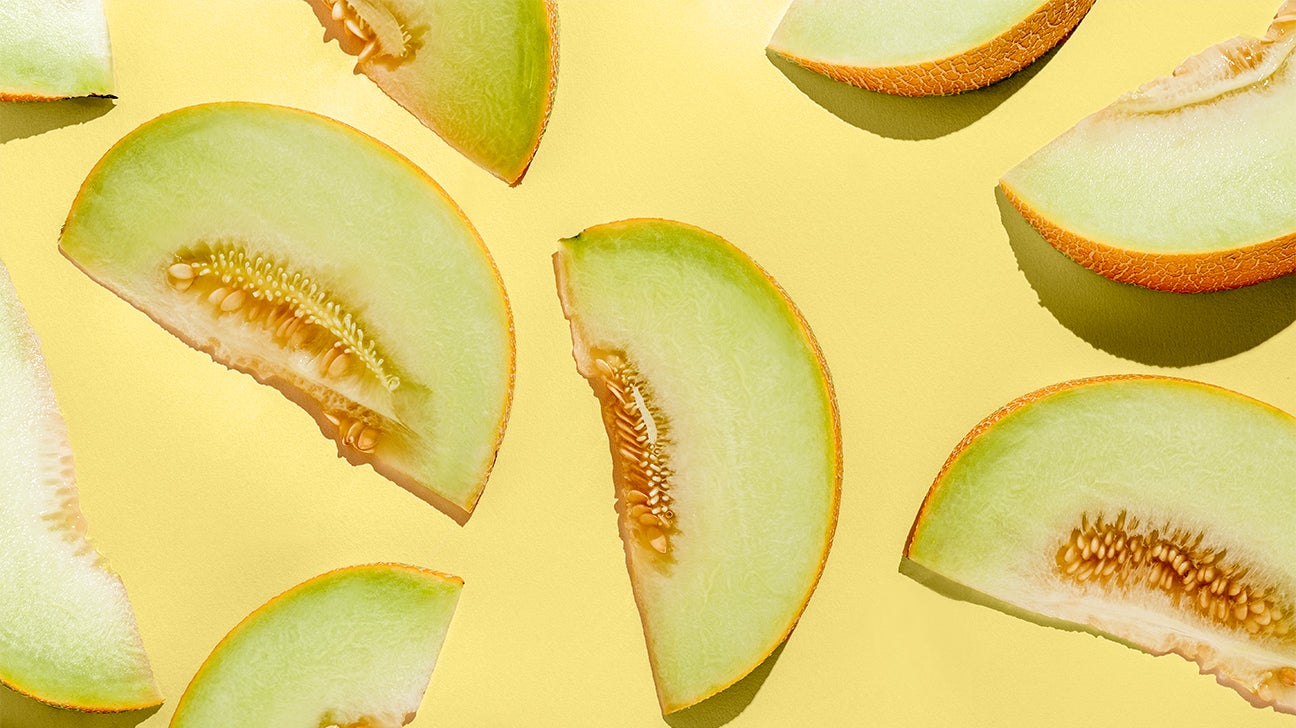
melon slices for a fruity snack header crop
Tatjana Zlatkovic/Stocksy

Would humanity really be humanity unless we found ways to dip everything in chocolate, make it into pizza, or shove a skewer through it? Of course not.

We found 31 amazing ways to make your fruit snacks a little more… fruity.

Sweet

When dessert puts on its healthy hat.

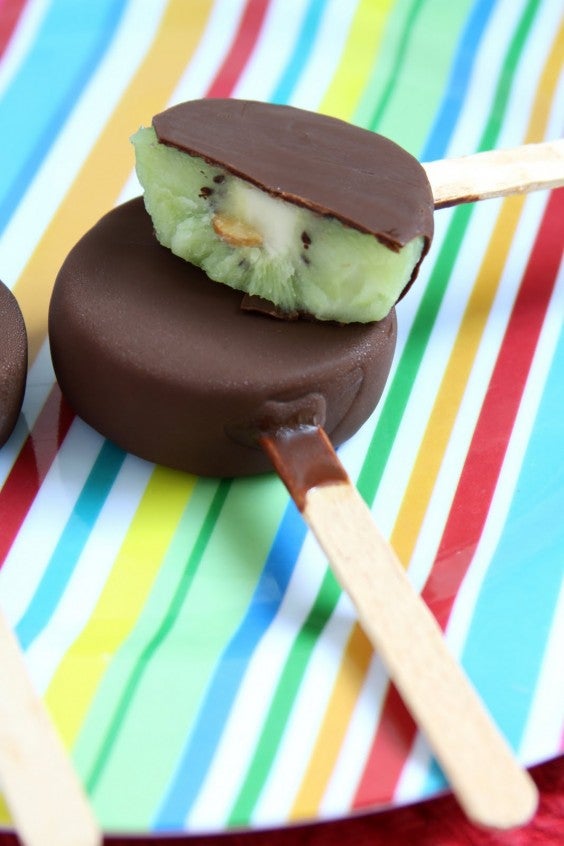
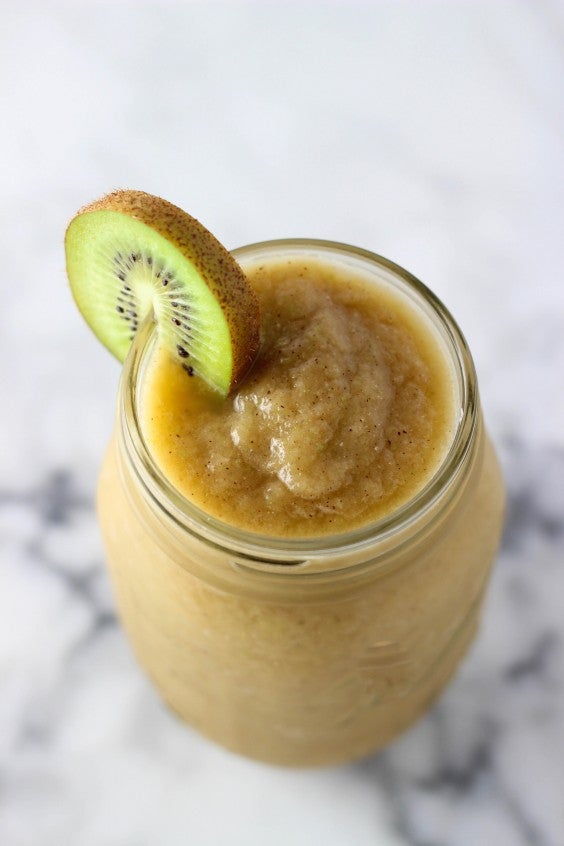
1. Chocolate kiwi ice pops

Chocolate Kiwi Popsicles
Photo: Show Food Chef

On the days when the strawberry/chocolate combo seems a little overdone, you can pull this surprise out of the bag and turn your snack time on its head.

The recipe calls for just three ingredients (kiwi, dark chocolate, and coconut oil), but we love ours with nuts or coconut flakes sprinkled on top.

Easy, delicious, and different.

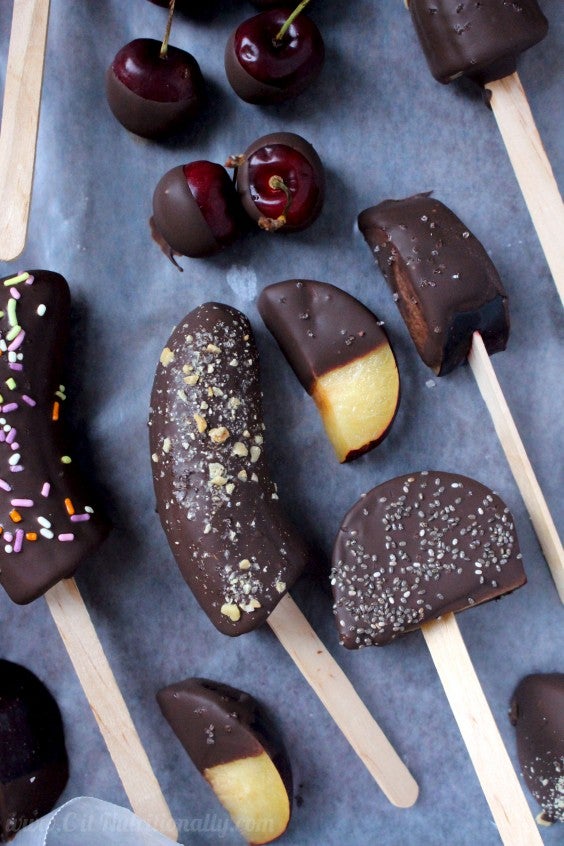
2. Chocolate-covered fruit

chocolate covered fruit
Photo: Chelsey Amer Nutrition

Pick your favorite fruits, dice ’em up, and skewer ’em. Dip them into melted dark chocolate, pop them in the freezer for a few hours, and it’s a job done — you have yourself a cool, sweet treat with minimal work.

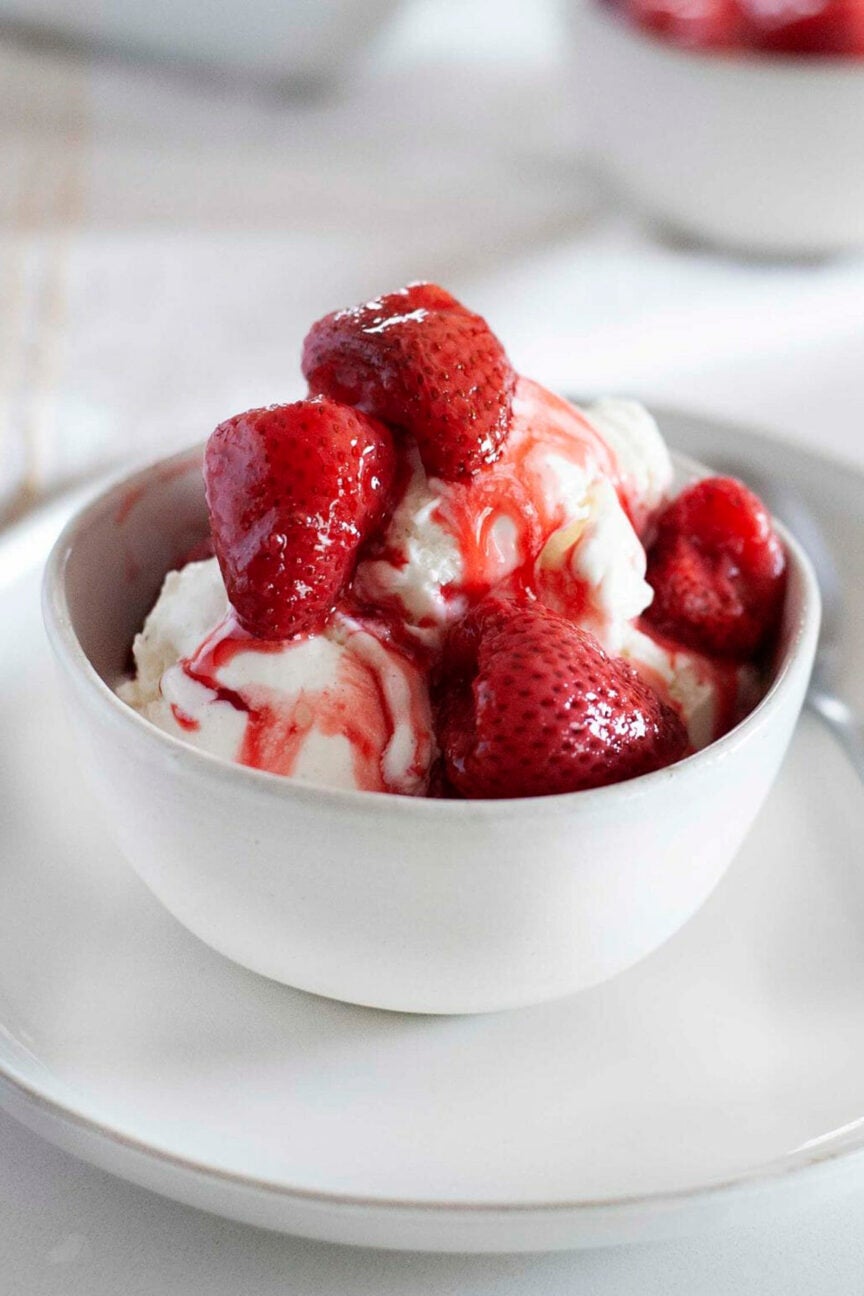
3. Vanilla roasted strawberries

vanilla roasted strawberries - a healthy fruit snack
Photo: Simply Recipes

This is a Swiss army knife of a sweet option. Get this right and you’ve got a topping for ice cream, oatmeal, and yogurt.

Roasting the strawberries kicks their flavor in the pants and makes it go — plus, it creates a rich syrup that brings an extra zhuzh to whatever the strawberries are sitting atop.

You probably never thought of roasting your strawbs before, but give it a go. It’s a great way to boost their already exceptional taste without adding sugar.

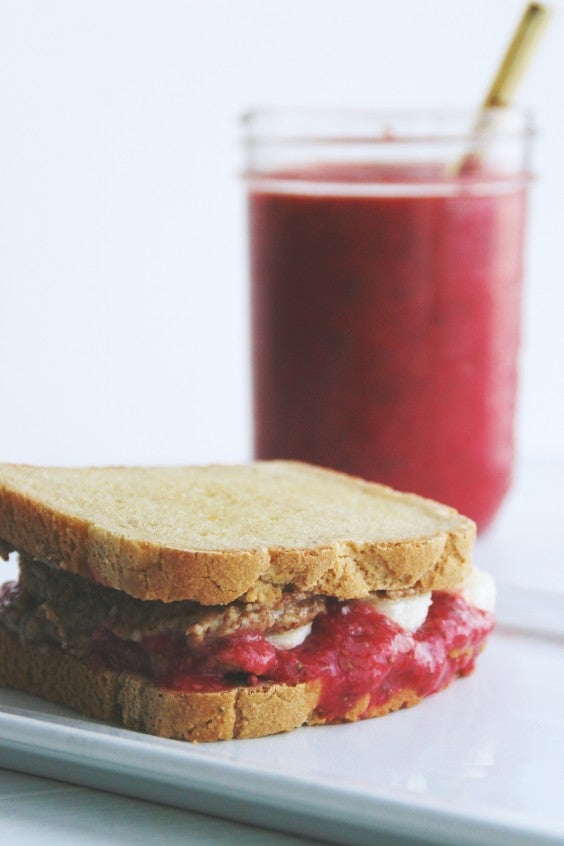
4. Almond butter, banana, and strawberry chia jam sandwich

almond butter, banana, and strawberry chia jam sandwich
Photo: Days Like Laura

“We didn’t turn up to a renowned Greatist recipe roundup just to have sandwiches thrown in our faces!”

We know, we know. But hear us out. This one’s a special take on PB&J that pushes all the right buttons.

Swap in almond butter, add some homemade strawberry chia jam, and you have yourself a bomb-ass concoction.

For a quicker recipe, you can also just add some sliced strawberries. The whole-grain bread and strawberries offer a great dose of heart-healthy fiber, the almond butter is rich in protein, and the banana’s packed with potassium.

How can you stay mad at us with all that potassium?

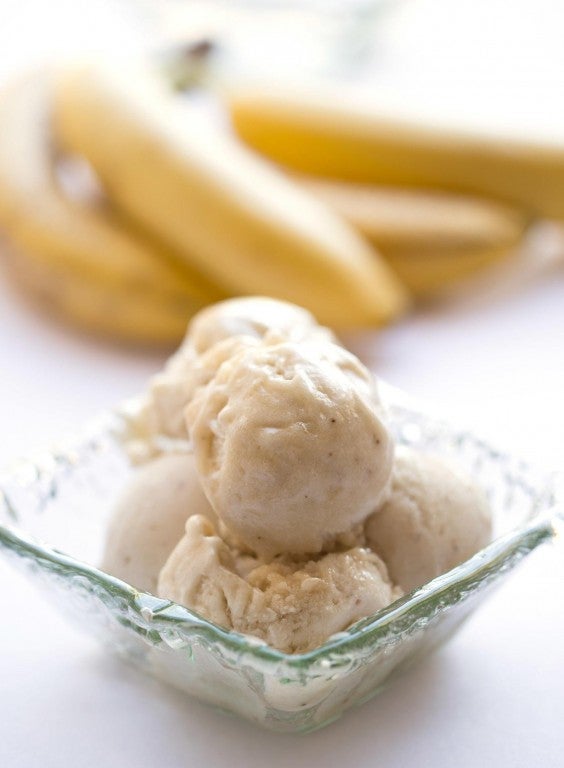
5. One-ingredient banana ice cream

banana icecream
Photo: Garlic Matters

Ice cream doesn’t have to be unhealthy — as long as you define “ice cream” pretty loosely.

Simply peel a few bananas, stick them in the freezer, and let them hang out for a few hours or until they’re solid. Put the frozen ’nanas in the bowl of a food processor and process them until smooth.

Finally, add your choice of mix-ins (if you like). Dark chocolate chips, diced strawberries, and a PB swirl are Greatist favorites.

6. Papaya punch smoothie

papaya punch smoothie
Photo: Exploring Healthy Foods

Idina Menzel, eat your heart out — this fruit, veggie, ice, and chia smoothie is the real delivery of frozen perfection.

It’s loaded with papaya, a tropical fruit that has tons of flavor and fiber. Papaya is also relatively low in sugar compared to other fruits, with just 11.3 grams per cup.

Papaya’s got a brand new bag.

7. Summer fruit spring rolls

summer fruit spring rolls
Photo: Bigger Bolder Baking

There’s no way you’d expect these flavors from spring rolls. Who knew they could taste this sweet?

This inventive take on the sushi restaurant favorite fills classic rice wraps with fresh fruit for a simple, slightly sweet (and super fun) snack.

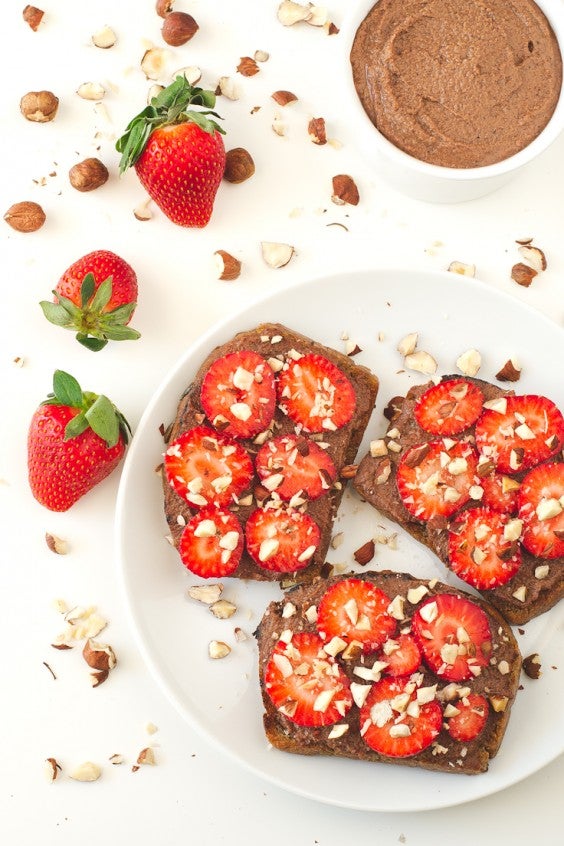
8. Strawberry Nutella bruschetta

strawberry nutella bruschetta
Photo: Simple Vegan Blog

It’s a recipe that rhymes satisfyingly and tastes even better than it sounds.

Strawberries plus Nutella is a classic combo. Just add a slice of toasted whole-grain bread for a fiber-rich, filling snack. You can also sprinkle some chia seeds, honey, or coconut flakes on top for an added flavor boost!

9. Lemon raspberry cheesecake ice pops

melon chili mint salad for a healthy fruit snack
Photo: Simply Recipes

The word “cheesecake” might make this recipe sound like a rich dessert, but it clocks in at half the calories of the classic cheesecake. Plus, you can hold it on a stick, so it might already be beating the original.

In this version, “cheesecake” is actually just the sweetened lemony Greek yogurt mixture that gives these pops a creamy texture.

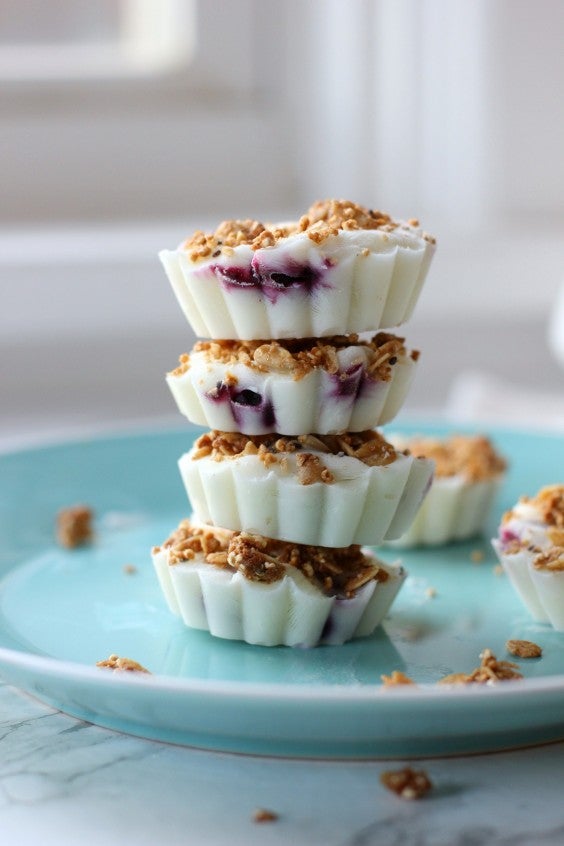
10. Frozen yogurt bites

frozen yogurt bites
Photo: I Heart Vegetables

This recipe is an awesome way to get creative with some items you probably already have in your kitchen.

Freeze some Greek yogurt with granola, pop whatever fruit you like on top, and boom! It’s a cute breakfast treat for the next morning!

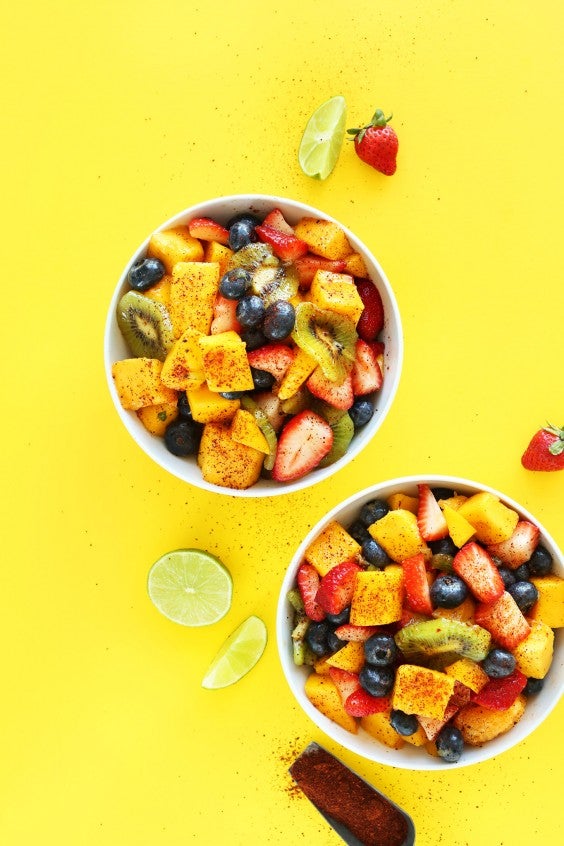
11. Spicy fruit salad

spicy fruit salad
Photo: Minimalist Baker

If you’ve ever thought of fruit salad as boring, you have to give this recipe a try (you’re also wrong — sorry).

Sprinkle some lime juice and chili powder on top of your favorite fruity mixture for an added kick in flavor and heat.

Can’t take the heat? You don’t have to get out of the kitchen — just try cinnamon instead.

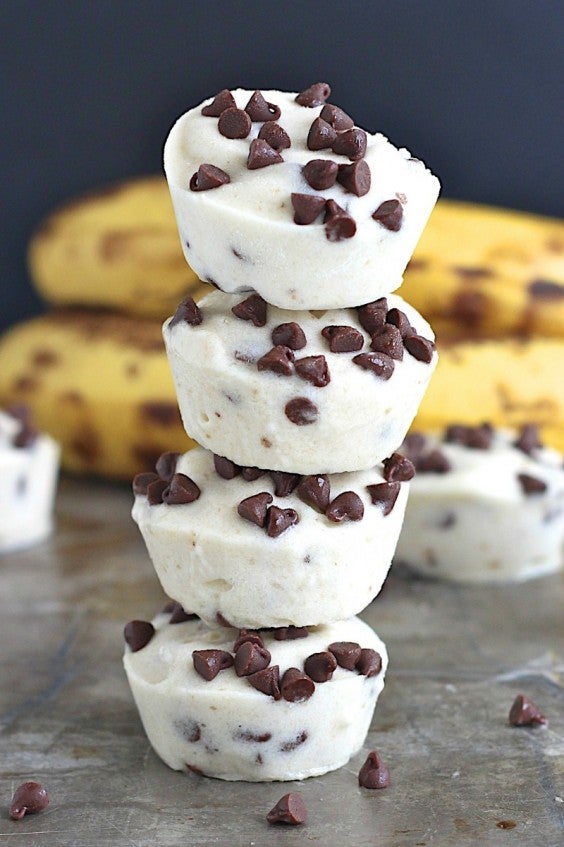
12. Two-ingredient banana chocolate chip ice cream bites

banana bites
Photo: The Baker Mama

Two of our favorite foods take center stage in this recipe: bananas and chocolate chips. You can’t go wrong here.

Blend up some frozen bananas in a food processor, and then dump in some chips. That’s it. These guys store for 2 to 3 months in the freezer, so feel free to make a giant batch to dip into whenever you feel the munchies.

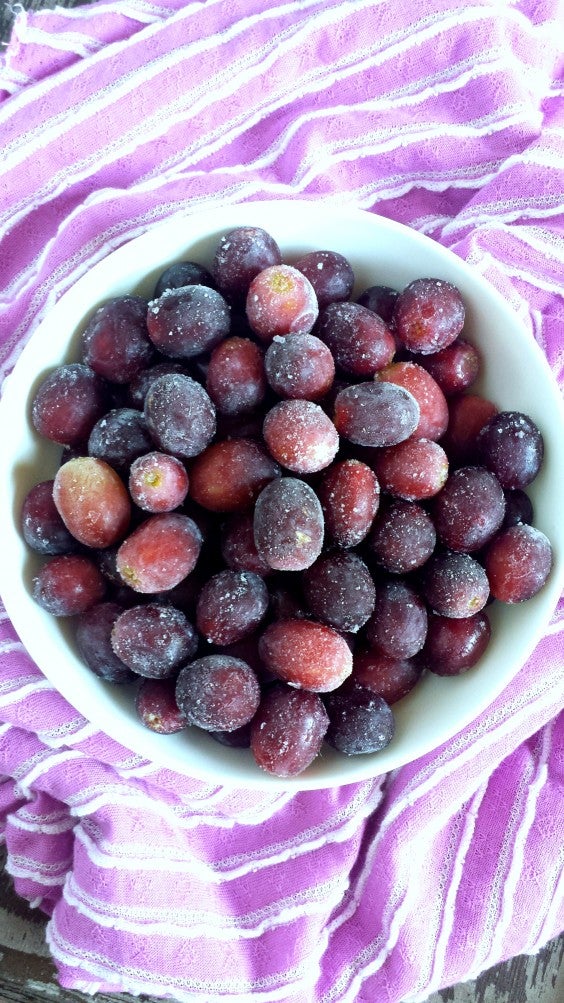
13. Frozen grapes

frozen grapes
Photo: Zen and Spice

This is so simple it barely qualifies as a recipe — it’s more of a recommendation, because, well, these bang.

Buckle up, because here are the steps:

  1. Remove grapes from vine.
  2. Freeze.
  3. Get snackin’.

This easy, naturally sweetened treat is perfect to keep in the freezer for when that sweet tooth comes calling.

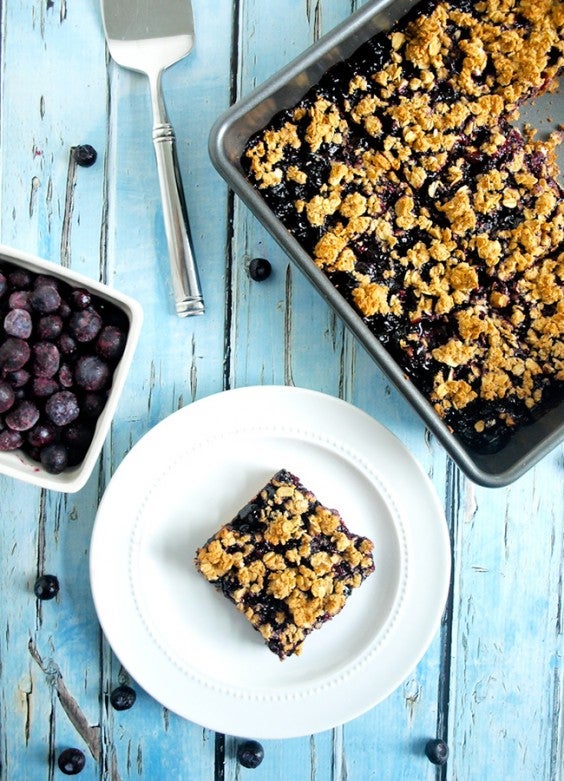
14. Vegan blueberry oat bars

vegan blueberry oat bars
Photo: Happy Healthy Mama

These breakfast-on-the-go bars are a healthier twist on blueberry cobbler.

The blogger uses just blueberries, but feel free to throw in some strawberries, raspberries, or blackberries for a mixed-berry version.

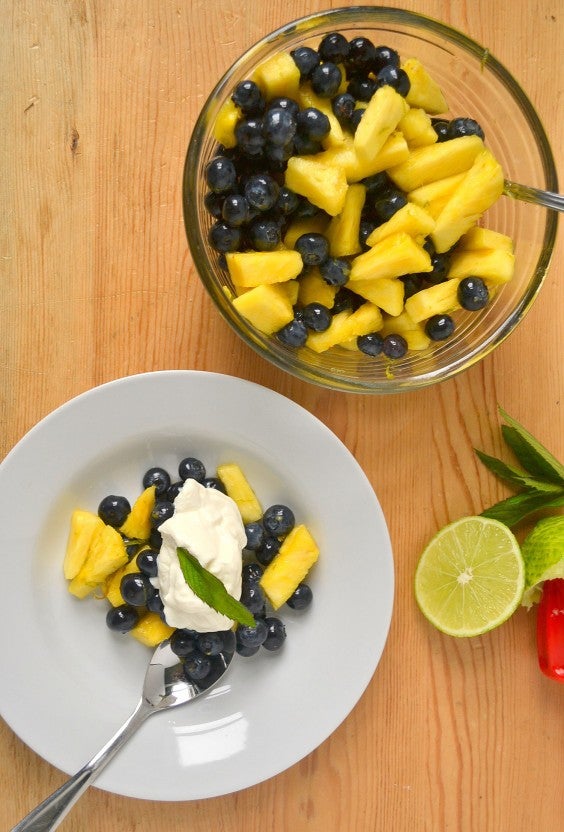
15. Pineapple and blueberry fruit salad

pineapple and blueberry fruit salad
Photo: Food Doodles

The key to this recipe is what goes on top (like a great hairdo or a zany hat).

Pineapples and blueberries are awesome, but when you add some lime zest, lime juice, honey, and Greek yogurt on top, you get a next-level treat that’s creamy, zingy, and healthy in equal measure.

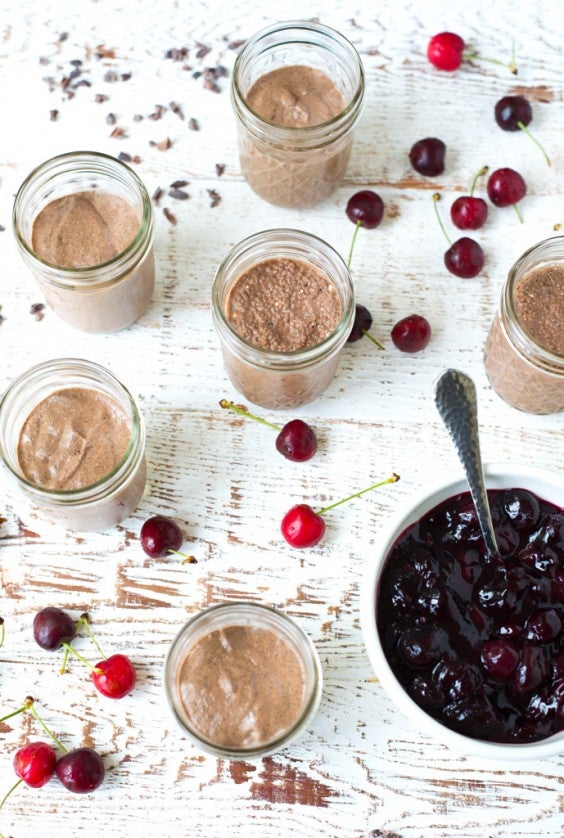
16. Cherries Jubilee chocolate chia seed pudding

cherries jubilee chocolate chia seed pudding
Photo: Real Food Whole Life

Cherries Jubilee is a classic dessert, but it isn’t exactly the healthiest snack.

This recipe keeps the awesome cherry flavor but adds some healthier substitutes (like cacao) and nutritional bonuses (like chia seeds). Plus, this looks great in a mason jar, so you can seem fancy at all times.

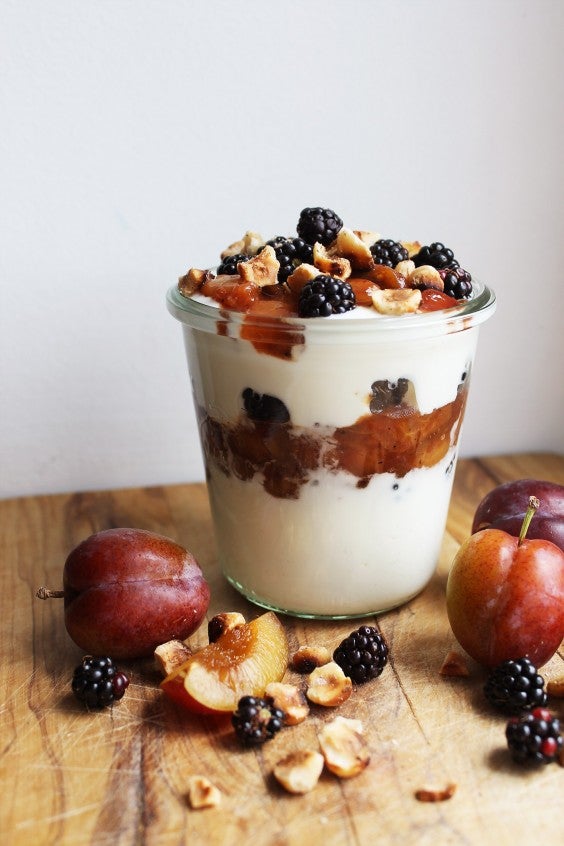
17. Yogurt breakfast parfait with plum compote

breakfast parfait plum
Photo: Cake and Whisky

This fall-inspired breakfast has an awesome combination of some pretty underrated fruits and nuts.

Plums, blackberries, and hazelnuts shine in the classic parfait-style snack. And if you’re really in the fall mood, try sprinkling some pumpkin pie spice on top (because you know full well it’s pumpkin spice everything season).

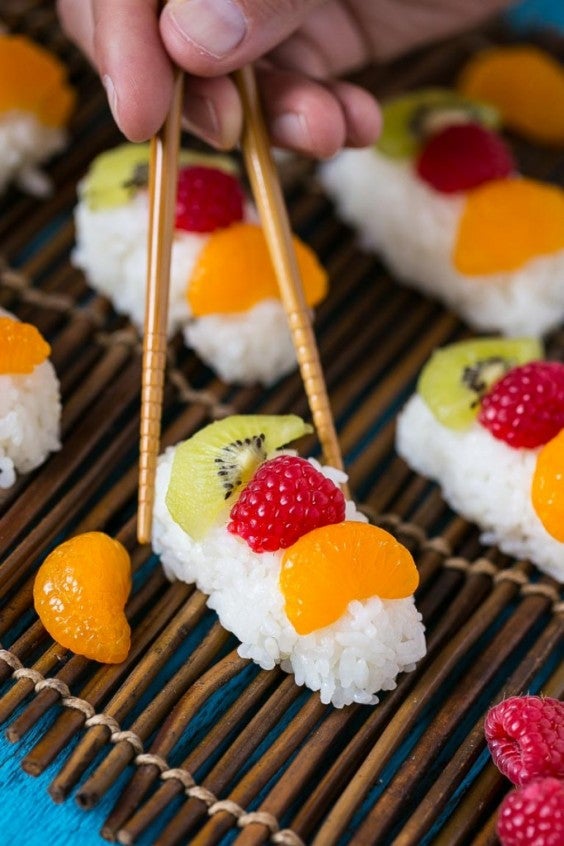
18. Fruit sushi (frushi)

fruit sushi
Photo: Dinner at the Zoo

Time to play with your food! (Also, “frushi” is an excellent name. You might want to consider it for a pet in the future.)

This is a super fun snack recipe. Put some sliced kiwi, oranges, and raspberries on top of sushi rice for a fancy treat.

Of course, feel free to improvise — sliced strawberries, mango, or apple would also make a tantalizing topper.

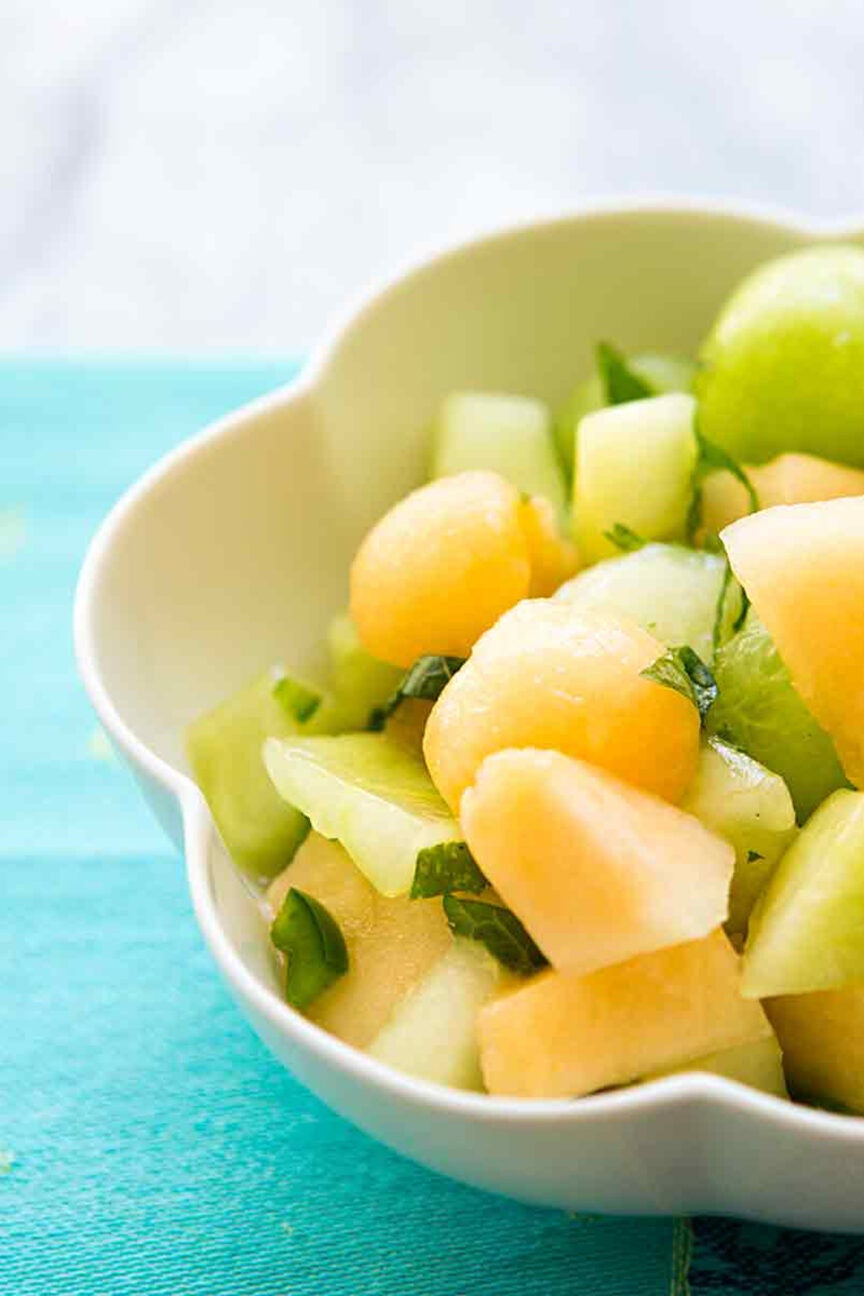
19. Melon salad with chili and mint

melon chili mint salad for a healthy fruit snack
Photo: Simply Recipes

No matter your age, making spherical chunks of melon is always a baller move (not sorry — that was great) and a lot of fun to boot. It rolls up just like ice cream.

Chili and mint make this a sophisticated, interesting array of flavors — you’ll never think about melon the same way again.

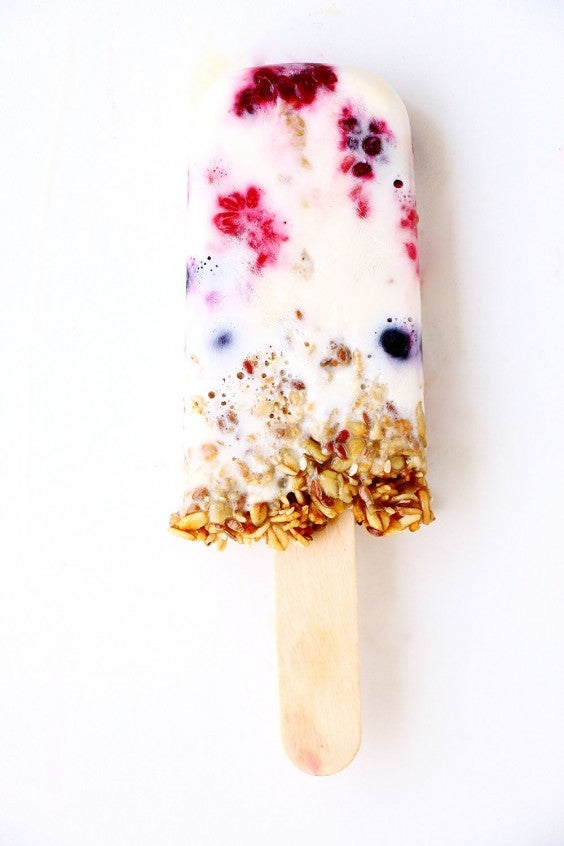
20. Breakfast yogurt pops

breakfast popiscle
Photo: I Heart Naptime

Tired of your same old yogurt-and-granola breakfast? Try changing up the shape. Yes, it all ends up in the same place, but shapes are fun and ice pops more so.

This recipe takes the classic combo and freezes it into a (very ’grammable) ice pop.

Just make sure to prep these the night before, since they need to sit in the freezer for at least 4 hours.

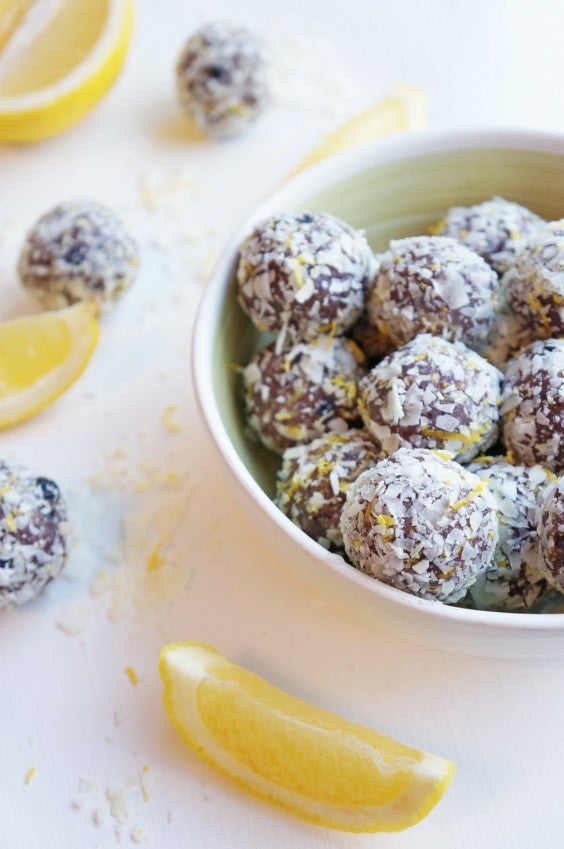
21. Blueberry coconut protein balls

blueberry protein balls
Photo: One Broad’s Journey

Making a ton of these little protein balls is the perfect way to meal-prep some snacks for the week.

The secret ingredient here is lemon. The combo of lemon juice and lemon zest adds a burst of flavor to the blueberry-coconut one-two punch.

Pop one of these in your cakehole for a kick-ass start to the day.

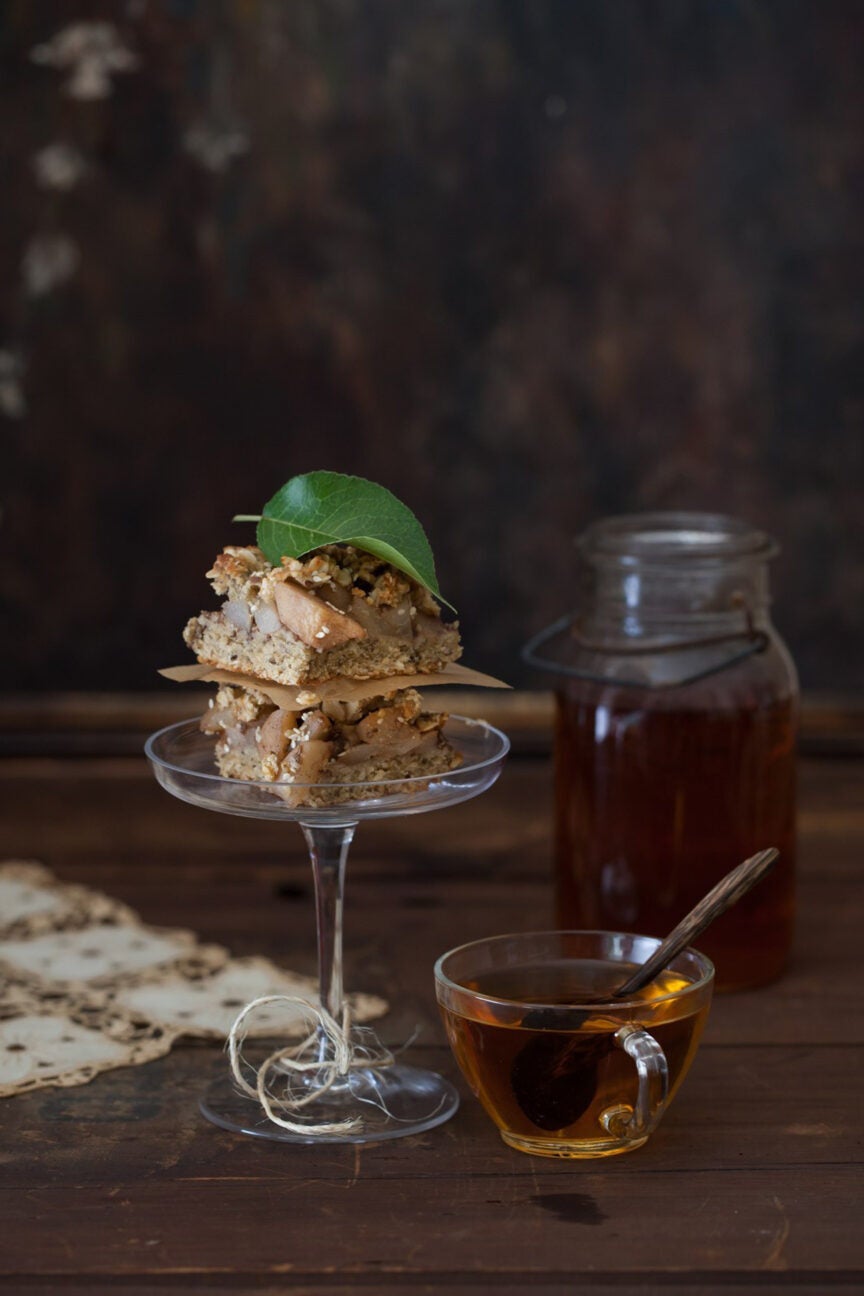
22. Sesame oat square bars with pear compote

sesame oat pear bites for a healthy fruit snack
Photo: Cooking Melangery

Oat bars are a great way to save some time in your week — and these are on the fancier side. Make a bunch on Sunday so you’ll be able to grab them on the go during your busy workweek.

Coconut oil binds all the oats together — there’s not an egg in sight, which makes these bars super-duper vegan-friendly.

The recipe includes a homemade pear compote that will satisfy any fruit lover’s craving.

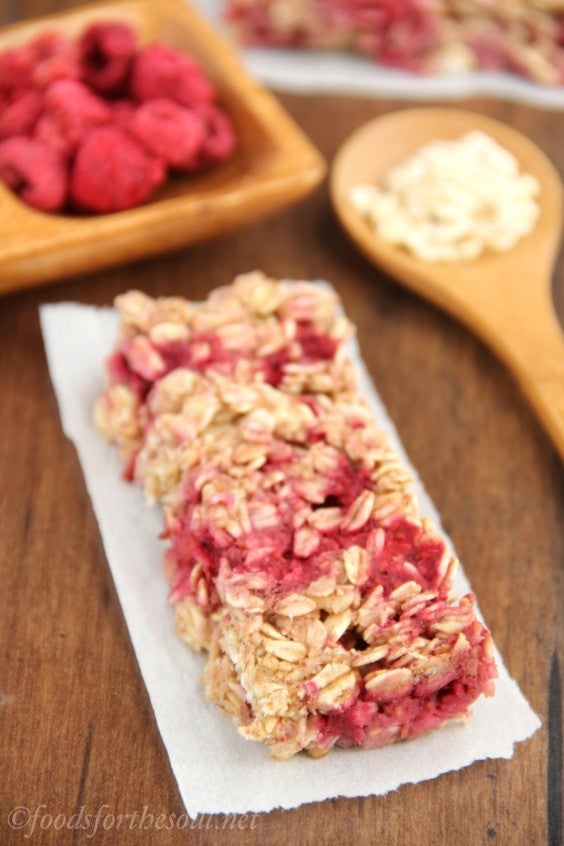
23. Chewy raspberry apple granola bars

raspberry granola bars
Photo: Amy’s Healthy Baking

Granola bars are far from boring when you make them at home. You can customize the flavors however you want, and there’s none of the processed ingredients and preservatives you’d find in store-bought options.

This simple version has just seven ingredients like milk, honey, oil, and cinnamon. Raspberries stand out and do jazz hands as the vibrant, delicious star of the show.

Fruits still have a lot of sugar

While fruits are amazing and can boast a huge range of vital vitamins and minerals, they come with a heavy hit of fructose — a natural sugar, but still a sugar.

If you’re on a sugar-restricted diet or have a condition that can impact your blood sugar levels, such as diabetes, it’s best to eat fruit in moderation and be selective about the fruit you eat.

Some fruits are better than others for people with diabetes — we rounded them up here.

Savory

A mix of flavors is the mark of enlightened kitchen work, so try to switch up your fruit game entirely and get creative.

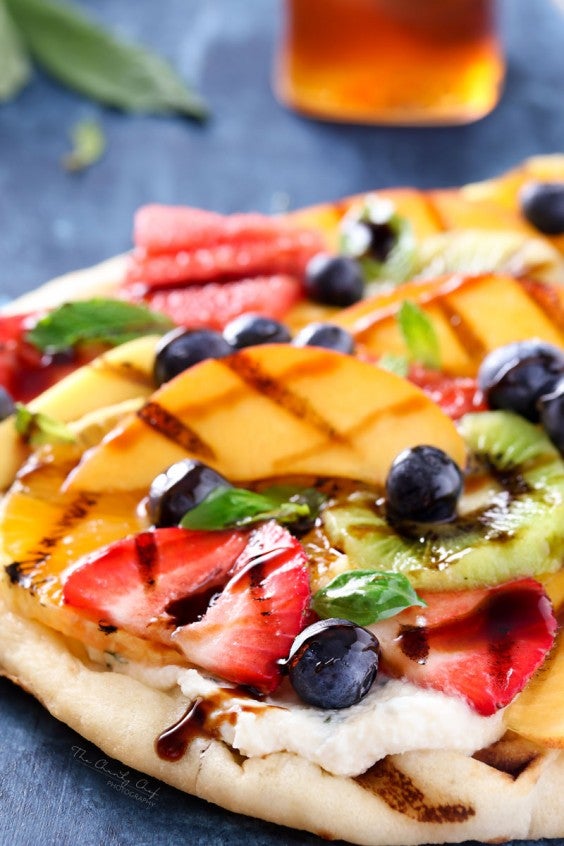
24. Grilled fruit pizza

grilled fruit pizza
Photo: The Chunky Chef

Oh, boy… is pizza not just bae? Well, we’re willing to wager that you haven’t had one with fruit and honey as a topping before. (If you’re one of those who falls on the angrier side of the pineapple-on-pizza debate, this one might not be for you. Or maybe it’ll convert you.)

Just grill up some pizza dough, naan, or tortilla and sprinkle your favorite fruits on top.

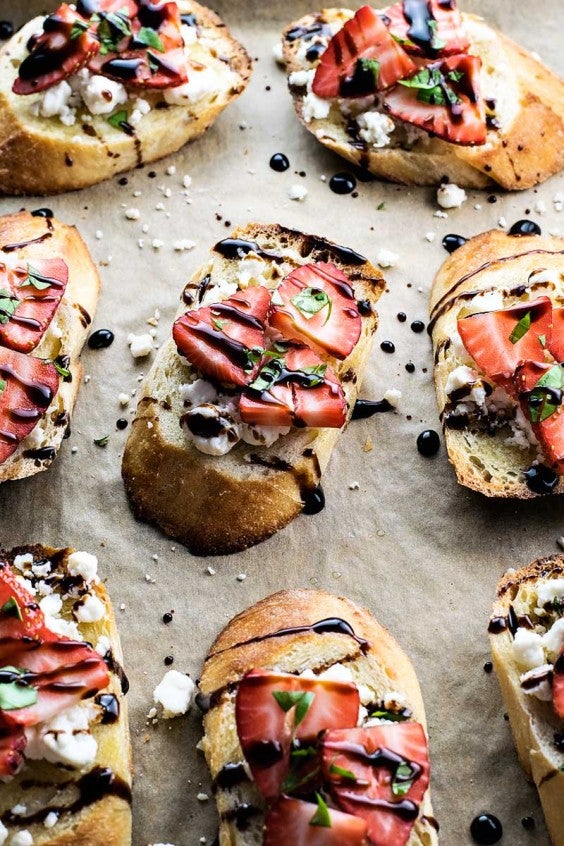
25. Strawberry and goat cheese bruschetta

strawberry goat cheese bruschetta
Photo: Homemade Hooplah

We’d eat goat cheese with pretty much anything, but it’s especially good with fruit. The creamy saltiness offsets the sweetness of many fruits beautifully. But strawberries hold the starring role here.

This bruschetta recipe features the gooey combo with a balsamic glaze on top that really brings out the strawberryishness (definitely a word) of the strawberries.

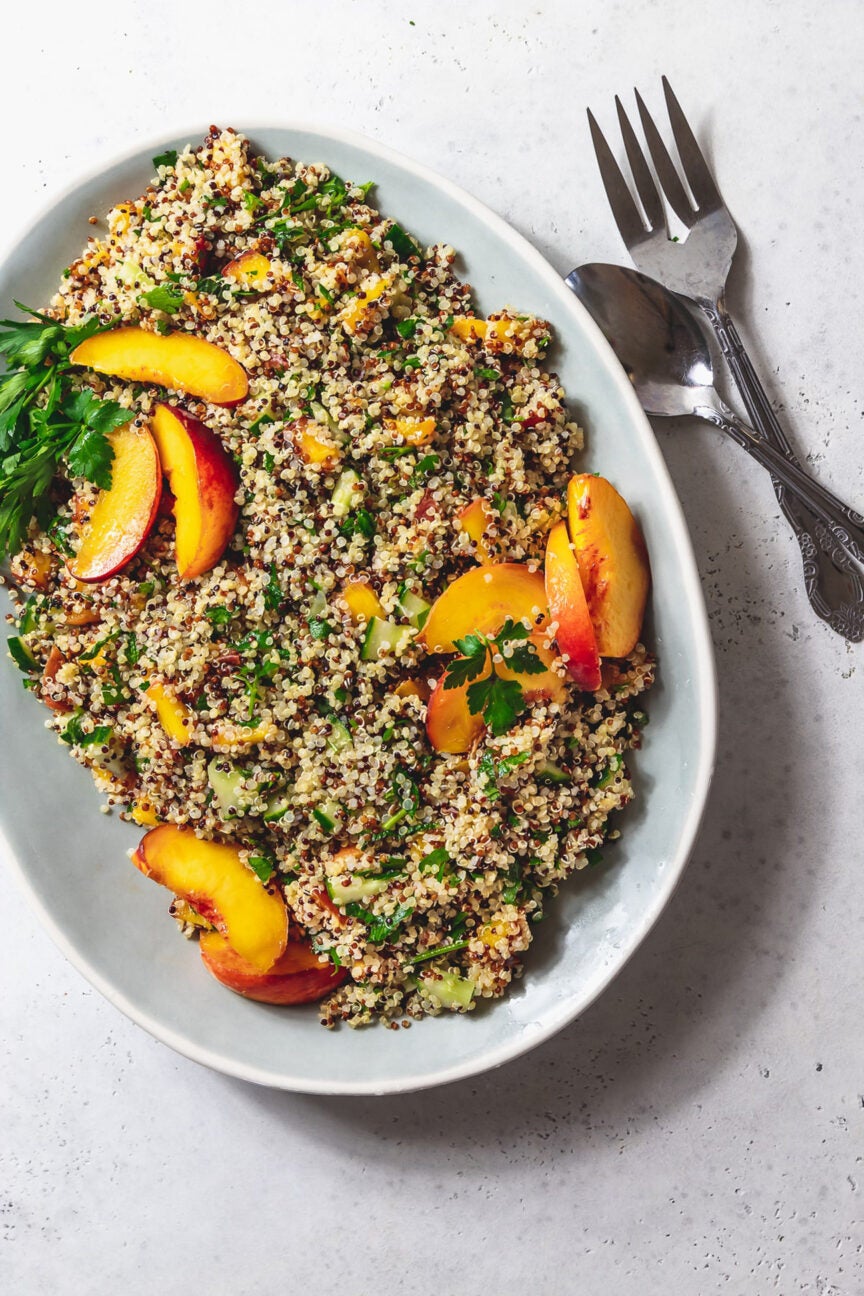
26. Peach quinoa tabbouleh

peach quinoa tabbouleh for a healthy fruit snack
Photo: Jo Eats

Peaches and quinoa might not seem like a match made in heaven, but this sweet and salty Middle Eastern-inspired dish has other ideas.

Honey, mint, and parsley dance around the peach flavors, adding all kinds of busy mouth sensations. Even as a side or a standalone snack, this intriguing tabbouleh stands all on its own.

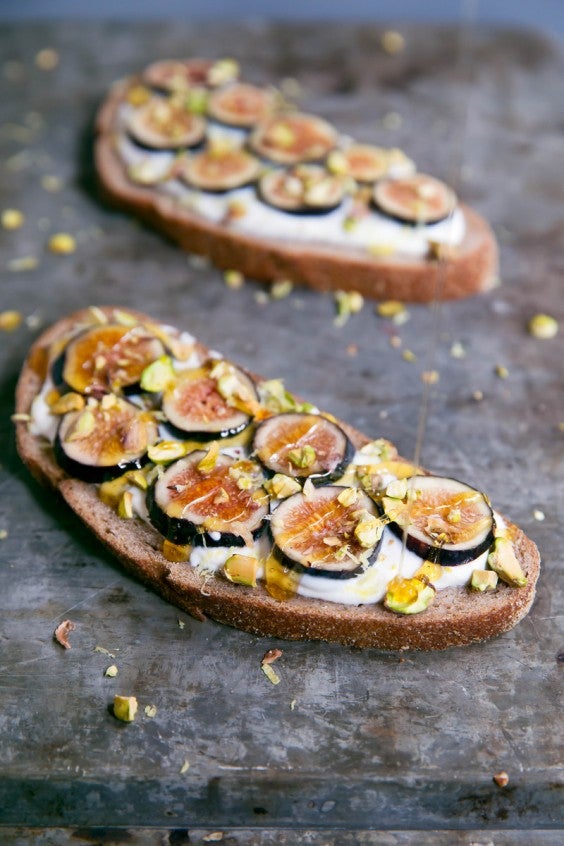
27. Honey-lemon toast with figs and pistachios

honey lemon toast
Photo: Ambitious Kitchen

Getting creative with toast is all the rage these days (thanks, avo toast!).

This honey-fig version is the perfect savory way to eat your fruit. With ricotta slathered on the base, stopping your snack at a single slice is the most difficult thing about this recipe.

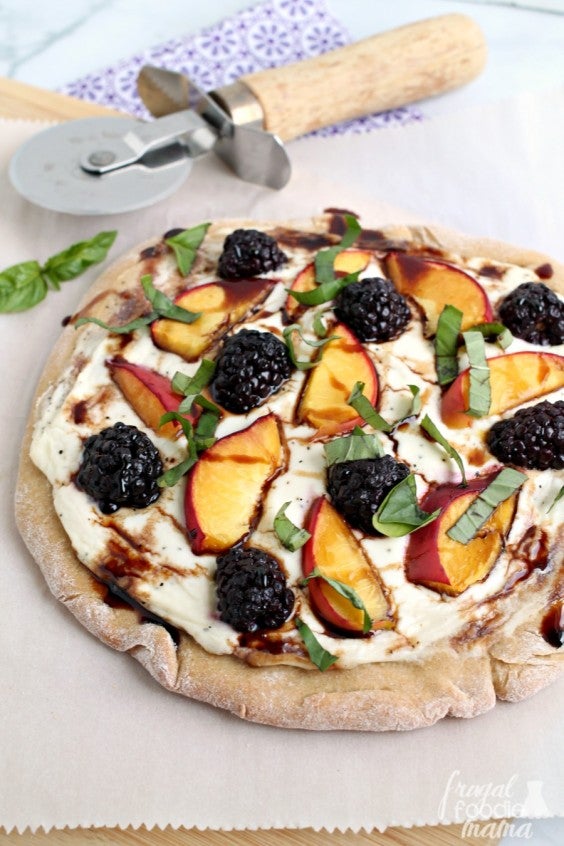
28. Creamy cheese fruit pizza

creamy cheese fruit pizza
Photo: The Frugal Foodie Mama

Fruity pizza: round two. (Wait, how is there more than one? Where the f*ck are all these fruit pizzas coming from?)

This one features peaches and blackberries, but feel free to make your own version with any fruit-cheese-dough combo.

Get as creative as your brain wants — they broke the seal with pineapples many moons ago. This is just the natural consequence.

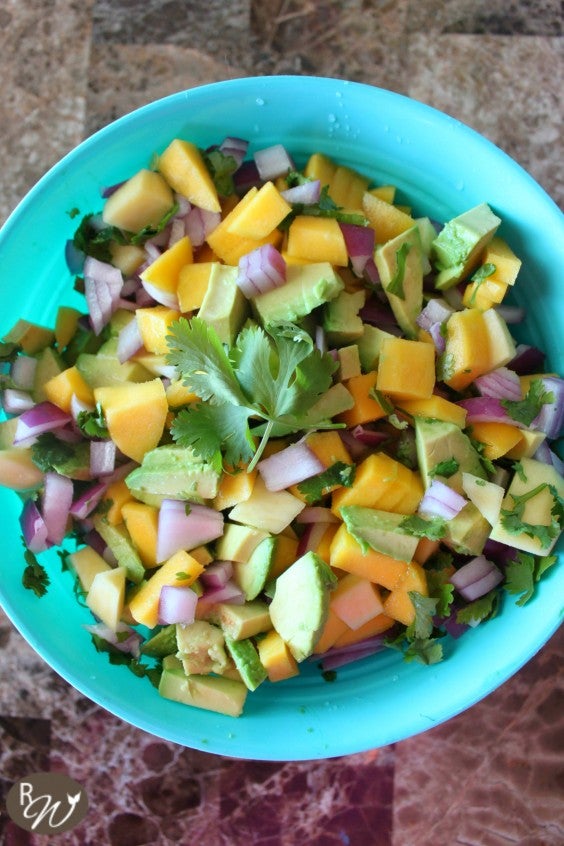
29. Mango, avocado, and fresh cilantro salsa

salsa
Photo: The Frugal Foodie Mama

You’ve heard that it takes two to tango — well, it can take two fruits to salsa. And, yes, avocado is a fruit.

This two-fruit salsa (yes, avocado is a fruit) is a way to give sweet flavors a savory twist when it’s served alongside classic tortilla chips.

Avocados are brimming with healthy monounsaturated fat and tons of vitamins, including vitamins E and B6.

30. Fig and prosciutto crostini

Fig and Prosciutto Crostini
Photo: Mama’s Gotta Bake

Fresh figs — does it get any better?

Well, when you wrap a fresh fig in a slice of salty prosciutto and stick it on top of some toasted bread, you’ll learn that there’s more to the already mighty fig than meets the eye.

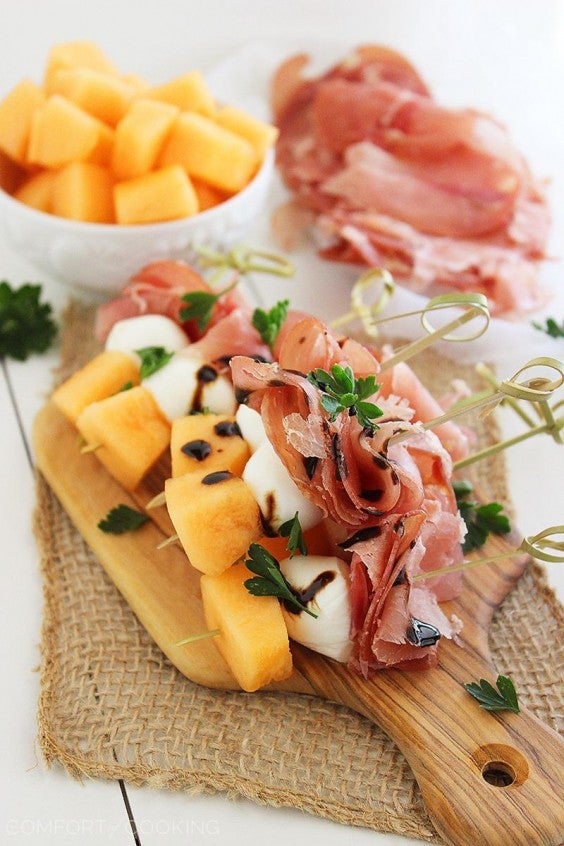
31. Melon, prosciutto, and mozzarella skewers

melon prosciutto skewers
Photo: The Comfort of Cooking

Here’s another awesome salty-sweet combo (because savory doesn’t mean you need to kick all the sweetness out).

Prosciutto and melon is a classic duo. Add fresh mozzarella, put it on a stick, and things get seriously tasty.

Takeaway

Fruit wears many disguises, and almost all of them are delicious (when put together right).

Whether you’re in the mood for sweetness or a broader experience for your taste buds, you don’t need added sugars. You can use the natural sugars in fruits to bolster the flavor of your meal and take advantage of their natural goodness.

Had your fill of pizzas made of fruit? Fine, here are some desserts made from vegetables (and if you think carrot cake is the limit, you are very much mistaken).


from Greatist Health RSS Feed https://ift.tt/2HZWbKL